
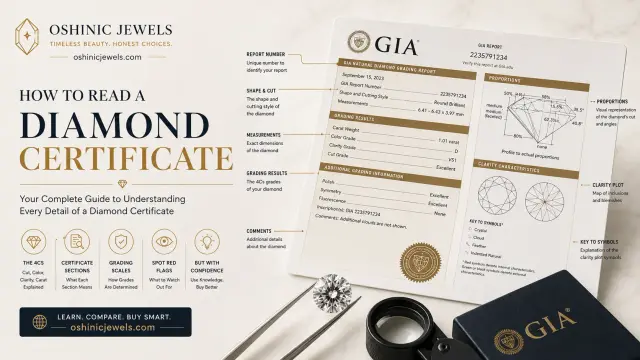
Introduction to diamond certificates
when you're shopping for a diamond, it's easy to get caught up in how it looks : The sparkle, the fire, the way it catches the light. But there's more to a diamond than its appearance. (and that's what makes it so important to understand the document that comes with it.) that document is called a diamond certificate, and it's issued by an independent gemological laboratory. This lab examines the diamond carefully and records its physical and optical characteristics. Think of it like a report card for the diamond.
It's so much way more than a piece of paper, though. A diamond certificate helps you understand exactly what you're buying. It gives you the facts, not just the salesperson's pitch. ) With a certificate, you can compare diamonds fairly and make a smarter decision. Whether you're buying an engagement ring,a diamond necklace. Plus Just a pair of earrings. And of course, knowing how to read a diamond certificate can save you money.
What's in a diamond certificate?
a diamond certificate is like a blueprint for the diamond. It includes all sorts of information, like: Carat weight, color grade, clarity grade, cut quality, measurements, polish, symmetry, fluorescence, and proportions. (that's a lot of technical terms, but don't worry, we'll break them down one by one.) this information helps you understand the diamond's quality and characteristics. It's not just about the carat weight, although that's often the first thing people notice.
The certificate is issued by a gemological laboratory, which is an independent organization that evaluates diamonds. They don't have any financial interest in the sale, so you can trust their assessment. ) The laboratory examines the diamond carefully and records its characteristics. This information is, like, then used to create the certificate.
Why diamond certificates matter
some people think that all diamonds with the same carat weight are similar. But that's not true. Two diamonds that weigh exactly one carat can be very different in terms of quality and price. (for example, one diamond might sparkle like crazy, while the other looks dull.) one diamond might be nearly flawless, while the other has visible inclusions. Without a grading report, it's hard to tell the difference.
A certificate helps you verify the authenticity of the diamond. Plus Compare it to other diamonds. And honestly, avoid overpaying. ) It also helps you understand the quality differences between diamonds and get insurance coverage. ) And if you ever decide to sell the diamond, a certificate can increase your resale confidence.
The most trusted diamond certification laboratories
not all gemological laboratories are created equal. Some are more trusted than others. The gemological institute of america (gia) is considered the most respected diamond grading organization in the world. They've strict grading standards, consistent evaluations, and a strong industry reputation. (they're like the gold standard of diamond grading.) many diamond experts consider gia certificates the benchmark against which other grading reports are measured.
The International Gemological Institute (IGI) is another widely recognized laboratory. They're particularly common for lab-grown diamonds. Plus Retail jewelry chains. And honestly, international markets. ) GCAL is known for providing additional performance analysis and guarantees. Some buyers appreciate the extra information included in GCAL reports.
Understanding the report number
every diamond certificate has a unique report number. This number is like a fingerprint for the diamond : It identifies the diamond and allows for online verification. (you can check the certificate online to make sure it's legitimate.) it also helps prevent fraud and matches laser inscriptions when present. (some diamonds have the report number laser engraved on the girdle, which is the outer edge of the stone.) before buying a diamond, it's a good idea to verify that the certificate number matches the inscription whenever possible.
Diamond shape and cutting style
the certificate will identify the diamond's shape. Common diamond shapes include round brilliant, oval, cushion, princess, emerald, pear, radiant, asscher, marquise, and heart. (that's a lot of different shapes, but each one has its own unique characteristics.) the shape affects the diamond's appearance, sparkle, price, and visual size. Round brilliant diamonds are the most popular because they generally provide the highest level of brilliance and fire.
Understanding diamond measurements
the certificate will also include the diamond's measurements. For a round diamond, this might include the diameter, depth, and other dimensions. (it's like a blueprint for the diamond.) for fancy: Shaped diamonds, the measurements will indicate the length, width, and depth. These measurements help determine whether the diamond is proportioned properly. Two diamonds with identical carat weights may appear very different in size depending on their measurements.
Carat weight: What it really means
carat weight is often the first specification buyers notice. But what does it really mean? a carat measures weight, not size. One carat equals 200 milligrams. (it's a unit of weight, not a unit of size.) common diamond sizes include 0.25 carat, 0.50 carat, 1.00 carat, 1.50 carat, and 2.00 carats. Many people mistakenly believe that a larger carat weight automatically means a better diamond. But that's not true.
00-carat diamond. Carat weight should always be considered alongside the other grading factors. ) You want a diamond that's well-cut. Plus Has good color and clarity. And honestly, is proportioned properly.
Understanding diamond color grades
diamond color refers to how colorless the diamond appears. The grading scale typically ranges from d to z. (it's like a big alphabet soup, but each letter has a specific meaning.) d: F diamonds are considered colorless. They're rare and command premium prices. G: J diamonds appear nearly colorless to most people. Many experienced buyers consider this range the sweet spot between quality and value. K: Z diamonds display noticeable color and are generally less expensive.
Understanding diamond clarity
clarity measures the presence of internal inclusions and external blemishes. (it's like a report card for the diamond's imperfections.) the clarity grade is based on the number, size, and position of these imperfections. (it's not just about whether the diamond has imperfections : It's about how noticeable they're.) a diamond with high clarity will have fewer imperfections, while a diamond with low clarity will have more.
) You want a diamond that's free of noticeable imperfections. ) A diamond certificate will give you the clarity grade, which will help you understand the diamond's quality. ) You can use this information to make a smarter decision when buying a diamond.
Natural diamond formation and clarity
natural diamonds form deep within the earth, where they're subjected to immense pressure : It's no wonder they often have minor imperfections. (these imperfections can be a good thing, as they make each diamond unique.) the clarity grading scale is used to evaluate these imperfections:
: Fl: Flawless (no inclusions or blemishes)
: If: Internally flawless (no inclusions, but...
: If: Internally flawless (no inclusions, but may have minor blemishes)
: Vvs1 and vvs2: Very very slightly included (minute inclusions that are difficult to detect)
: Vs1 and vs2: Very slightly included (minor inclusions that are somewhat easy to detect)
: Si1 and si2: Slightly included (noticeable inclusions)
: I1: I3: Included (obvious inclusions that can affect transparency and brilliance)
Flawless and vs diamonds
flawless diamonds are extremely rare and expensive : They've no visible inclusions, even under professional magnification. Vs diamonds, on the other hand, typically appear clean to the naked eye and offer a great balance between beauty and value. (they're a popular choice for those who want a high: Quality diamond without the hefty price tag.) vs1 and vs2 diamonds are often preferred for their excellent balance of quality and affordability.
Si diamonds
many si1 diamonds appear eye: Clean, meaning they've no visible inclusions to the naked eye. (this makes them a great option for value: Conscious buyers who want a beautiful diamond without spending too much money.) they're often significantly less expensive than higher: Grade diamonds, but still offer a lot of sparkle and fire. Si2 diamonds may have more noticeable inclusions, but they can still be a great choice for those on a budget.
Cut grade: The most important factor
cut quality is often considered the most important of the 4cs (carat, color, clarity, and cut). A well: Cut diamond can make all the difference in its appearance : It reflects light efficiently and creates a lot of sparkle, fire, brilliance, and scintillation. (a poorly cut diamond, on the other hand, can look dull and unimpressive, even if it's colorless and flawless.) the cut grade scale evaluates the quality of a diamond's cut:
: Excellent: Highest performance
: Very good: Outstanding performance
: Very good: Outstanding performance
: Good: Acceptable performance
: Fair: Below average performance
: Poor: Weak light performance
Understanding polish
polish refers to the smoothness of a diamond's facet surfaces. (it's an important factor in a diamond's overall appearance.) during the cutting and finishing process, small imperfections can remain on the facet surfaces. Polish grades include:
: Excellent: Very smooth facets
: Very good: Smooth facets with minor imperfe...
: Very good: Smooth facets with minor imperfections
: Good: Noticeable imperfections
: Fair: Obvious imperfections
: Poor: Rough facets
most buyers should look for very good or excellent polish, as it can make a big difference in the diamond's sparkle and fire.
Understanding symmetry
symmetry refers to the precision of facet alignment. (it's for a diamond's overall appearance and light performance.) when facets are arranged correctly, light reflects more efficiently, sparkle improves, and visual performance increases. Symmetry grades include:
: Excellent: Precise facet alignment
: Very good: Minor deviations in facet alignment
: Very good: Minor deviations in facet alignment
: Good: Noticeable deviations in facet alignment
: Fair: Obvious deviations in facet alignment
: Poor: Significant deviations in facet alignment
higher symmetry generally contributes to a more attractive diamond, so it's an important factor to consider.
What's fluorescence?
fluorescence describes how a diamond reacts when exposed to ultraviolet (uv) light. (it's a common phenomenon in diamonds, but it's not always a bad thing.) possible grades include:
: None: No fluorescence
: Faint: Minimal fluorescence
: Faint: Minimal fluorescence
: Medium: Moderate fluorescence
: Strong: Significant fluorescence
: Very strong: Extreme fluorescence
some buyers worry about fluorescence unnecessarily : In many cases, faint fluorescence has little effect on the diamond's appearance. (in fact, medium fluorescence can even improve the appearance of lower: Color diamonds.) however, very strong fluorescence can occasionally create a slightly hazy appearance, so it's worth considering.
Understanding diamond proportions
professional jewelers pay close attention to proportions because they strongly influence light performance. (the certificate usually includes several key measurements.) the table percentage, depth percentage, crown angle, and pavilion angle all work together to determine how well the diamond reflects light.
: Table percentage: The table is the large flat facet on top of the diamond. For round diamonds, many experts prefer a table percentage between 54% and 58%.
: Depth percentage: Depth measures the height...
: Depth percentage: Depth measures the height of the diamond relative to its width. A common preferred range is between 59% and 62.5%.
: Crown angle: The crown is the upper portion of the diamond. Ideal crown angles often fall between 34° and 35°.
: Pavilion angle: The pavilion is the lower portion of the diamond. Many high: Performing diamonds have pavilion angles between 40.6° and 40.9°.
when these proportions work together correctly, the diamond reflects maximum light back to the viewer, creating a lot of sparkle and fire.
Understanding the diamond plot diagram
many certificates include a plotting diagram, which is a visual map that shows:
: Internal inclusions
: Surface blemishes
: Surface blemishes
: Unique identifying characteristics
the plot acts like a fingerprint for the diamond : Even two diamonds with identical grades will have different inclusion patterns. (it's a useful tool for verifying the diamond's identity and authenticity.)
Laser inscriptions
modern diamonds often feature microscopic laser inscriptions, which can include:
: Certificate number
: Laboratory logo
: Laboratory logo
: Brand identification
the inscription is usually located on the girdle and can't be seen without magnification. (it provides an additional layer of verification and can help prevent fraud.)
Verifying a diamond certificate
before making a purchase, it's essential to verify the diamond certificate. Here's how:
1. Find the certificate number.
2
2. Visit the laboratory's official verification page.
3. Enter the report number.
4. Compare the online results with the certificate and seller's listing.
all information should match exactly : If anything appears inconsistent, ask questions before proceeding.
Common mistakes buyers make
many buyers make mistakes when purchasing diamonds. Some common errors include:
: Focusing only on carat weight: A larger diamond isn't always the better diamond : Quality is more important than size.
: Ignoring cut quality: Cut quality dramatica...
: Ignoring cut quality: Cut quality dramatically affects appearance, so it's essential to prioritize it.
: Paying too much for flawless grades: Most people can't distinguish between a flawless diamond and a vs diamond without magnification, so it's not worth the extra cost.
: Not checking certification: Always verify grading information independently : Never rely solely on a seller's description.
A practical example
imagine two diamonds:
: Diamond a: 1.00 carat, d color, if clarity, good cut
: Diamond b: 0
: Diamond b: 0.95 carat, g color, vs2 clarity, excellent cut
many buyers would actually prefer diamond b because it may appear more brilliant and cost significantly less. (this example demonstrates why understanding the entire certificate is so important : It's not just about the 4cs, but about how they work together to create a beautiful diamond.)
What professional jewelers look for
when evaluating diamonds, professionals often prioritize:
: Cut quality
: Light performance
: Light performance
: Eye: Clean clarity
: Near: Colorless appearance
: Value for money
many experts recommend:
: G: H color
: Vs2: Si1 clarity
: Excellent cut
: Excellent or very good polish
: Excellent or very good symmetry
this combination often delivers exceptional beauty without unnecessary cost.
Frequently asked questions
some common questions about diamond certification include:
: Is a diamond certificate the same as an appraisal? no, a certificate evaluates quality, while an appraisal estimates monetary value.
: Can a certificate increase resale value
: Can a certificate increase resale value? a certificate doesn't increase quality, but it often improves buyer confidence during resale.
: Which certification is most trusted? gia is generally considered the most respected grading authority worldwide.
: Should i buy an uncertified diamond? it's not recommended : Certification provides an essential layer of verification and can help prevent fraud.
The importance of certification for significant purchases
when you're making a significant purchase, it's to get certification : Don't even think about skipping this step. Certification gives you peace of mind, and it's strongly recommended. You're not just buying a diamond, you're buying a piece of history, and certification proves its authenticity.
Understanding diamond pricing
it's possible for two diamonds to have identical grades but vastly different prices : This can be confusing, but it's true. There are several factors that influence pricing, such as the proportions of the diamond (is it cut well?), fluorescence (does it glow under uv light?), brand reputation (is it from a well: Known designer?), and market demand (is it a popular style?). These factors can all impact the price of a diamond, so it's essential to consider them when making a purchase. For example, a diamond with a high brand reputation might be more expensive than a similar diamond from a lesser: Known brand.
The value of a diamond certificate
a diamond certificate is so much way more than a piece of paperwork : It's a detailed roadmap that reveals the true characteristics of a diamond. By studying the certificate, you can understand the carat weight (how much does it weigh?), color (is it colorless or does it have a hint of yellow?), clarity (are there any imperfections?), cut (is it well: Proportioned?), polish (is it smooth?), symmetry (is it balanced?), fluorescence (does it glow?), and proportions (is it cut to bring out the most sparkle?) of the diamond. This information is critical in evaluating diamonds and avoiding costly mistakes : You don't wanna buy a diamond that's not what you thought it was.
Making an informed purchase
the next time you're shopping for a diamond, don't just focus on the size or sparkle : Take a few minutes to study the grading report carefully. It's worth the extra time, trust me. Understanding how to read a diamond certificate will help you compare stones objectively, identify the best value, and choose a diamond that matches both your expectations and your budget. You'll be able to see what makes each diamond unique and make a more informed decision. For instance, you might find that a smaller diamond with excellent cut and polish is more beautiful than a larger diamond with imperfections.
The benefits of being an informed buyer
being an informed buyer is usually a happier buyer : It's true. When you know what you're getting, you're more likely to be satisfied with your purchase. A diamond certificate is one of the most valuable tools available for making a smart jewelry purchase : It's like having a guide to help you navigate the process. By taking the time to understand the certificate and what it means, you'll be able to find the perfect diamond for you, and you'll be happy with your purchase for years to come. So, don't be afraid to ask questions, do your research, and take your time : It's worth it in the end.
Conclusion
in the end, buying a diamond is a big decision, and it's essential to get it right. By understanding the importance of certification, the factors that influence pricing, Related Reading: For more expert insights, check out our diamond buying guides, our metals & gold guides and our gemstone guides. and the value of a diamond certificate, you'll be well on your way to making a smart purchase. Remember to take your time, do your research, and don't be afraid to ask questions : It's all part of the process. With a little knowledge and patience, you'll find the perfect diamond, and you'll be happy with your purchase for years to come. That's what it's all about : Finding the perfect diamond, and enjoying it for a lifetime.

