What’s Nickel-Free Jewelry?
That elegant necklace you recently purchased now leaves a persistent red, itchy irritation on your neck. Or perhaps your go-to earrings trigger swelling and discomfort every time you wear them. If this scenario resonates, you’re far from alone. Nickel allergy is one of the most widespread skin sensitivities globally, affecting countless individuals who desire to enjoy beautiful jewelry without enduring discomfort. The term “nickel-free” is frequently tossed around in the jewelry industry, but its meaning can be murky. Is it a reliable guarantee, a savvy marketing term, or something in between? Let’s unravel the ambiguity to empower you to shop with confidence and protect your skin.
Understanding the Term “Nickel-Free”
At face value, “nickel-free” seems straightforward: a product contains no nickel. However, the reality is nuanced. Regulations and manufacturing practices vary widely, which means the label might not always align with consumer expectations.
The European Union has established rigorous standards through its Nickel Directive, which sets a benchmark for the industry. According to these regulations, jewelry that comes into direct contact with the skin must not release more than 0.5 micrograms of nickel per square centimeter per week. For jewelry designed for piercings—such as earrings or nose rings—the limit is even stricter, capped at 0.1 micrograms per square centimeter per week. The UK adheres to the same stringent standards.
A critical detail often overlooked is the absence of a federal standard in the United States defining “nickel-free” for jewelry. This regulatory gap allows some brands to label products as “nickel-free” even if they contain trace amounts of nickel, provided the metal isn’t intentionally added during production. For individuals with mild sensitivities, these trace amounts may not provoke a reaction. However, for those with severe allergies, even minute exposure can trigger discomfort. This discrepancy underscores why understanding the specific composition of jewelry metals is more crucial than relying solely on labels.
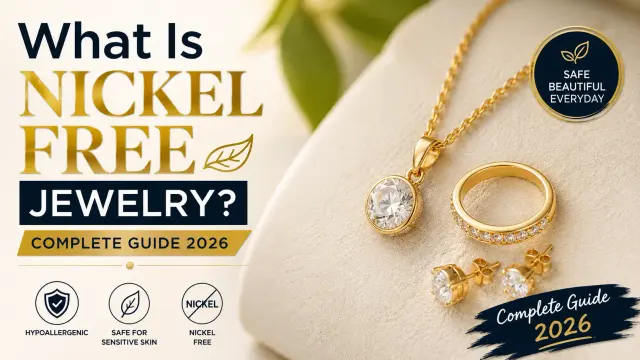
The Science Behind Nickel Allergies
Nickel allergy is a form of allergic contact dermatitis, an immune response where the body mistakenly identifies nickel ions as foreign invaders. When nickel-containing jewelry touches the skin, perspiration and moisture catalyze a process called corrosion, releasing nickel ions that penetrate the skin’s barrier.
Common symptoms of a nickel allergy include:
- A red, itchy rash at the point of contact
- Bumps, blisters, or dry, cracked skin
- Swelling and tenderness in the affected area
These reactions typically emerge 12 to 48 hours after exposure and can persist for up to a month. The most vulnerable areas include earlobes, wrists, fingers, and regions where metal fasteners come into contact with skin. Once developed, a nickel allergy is permanent. The only effective preventive measure is avoiding direct skin contact with nickel-containing metals.
Metals That Truly Lack Nickel
Not all metals marketed as “nickel-free” are equally safe for sensitive skin. The following breakdown highlights hypoallergenic metals, their durability, ideal use cases, and cost considerations:
Titanium : The Allergy-Proof Choice
Titanium is a natural element with zero nickel content. Renowned for its exceptional strength-to-weight ratio, titanium is approximately 40% lighter than steel, making it remarkably comfortable for everyday wear. Medical-grade titanium (Grade 1) is particularly valued for its malleability, rendering it ideal for earring findings and intricate wirework. Its resistance to corrosion ensures it is highly tarnish-resistant, and its inert nature eliminates the risk of skin reactions. While historically popular in minimalist and men’s jewelry, titanium’s appeal is expanding across all design aesthetics. The primary limitation is its relatively higher cost compared to some alternatives.
Niobium : The Colorful Alternative
Niobium, another pure element with no nickel, offers a unique advantage: its ability to display vibrant anodized colors through a process that alters the metal’s oxide layer without plating. This makes it a favorite for artistic wire jewelry and bold designs. Softer than titanium, niobium is highly malleable yet durable, resisting tarnish and corrosion. Its non-reactive properties make it safe for both new and healed piercings. Despite its premium price point, niobium’s versatility and hypoallergenic qualities justify its cost for many wearers.
Platinum : The Premium Option
Platinum is naturally hypoallergenic, containing no nickel whatsoever. As one of the densest precious metals, it boasts unparalleled durability, resisting scratches and wear better than gold. Platinum jewelry is typically composed of 90–95% pure platinum, with the remaining percentage consisting of safe metals like ruthenium or cobalt. While its luxurious luster and longevity position it as a top-tier choice, its cost is significantly higher than that of gold, making it a consideration primarily for high-end or heirloom pieces.
Gold plated: Choose Wisely
Not all gold is inherently nickel-free. Jewelers often alloy gold with other metals to enhance durability, and nickel is a common additive in white gold to achieve its signature silvery hue. To ensure safety:
- 18k Yellow Gold : Contains 75% pure gold alloyed with copper and silver, making it nickel-free.
- 18k Rose Gold : Achieves its pink color through copper alloying, without nickel.
- Nickel-Free White Gold : Uses palladium or silver instead of nickel.
Avoid most 14k and 10k white gold options, as they frequently contain nickel. Always verify the alloy composition with the jeweler.
Sterling Silver: Check the Source
Sterling silver (92.5% pure silver) is an alloy, with the remaining 7.5% consisting of other metals. While some manufacturers add nickel to enhance hardness or reduce tarnishing, reputable sources avoid this practice. When purchasing sterling silver, inquire about the alloy’s composition. Ethical jewelers will transparently disclose the materials used.
Surgical Stainless Steel: A Misconception
Surgical stainless steel (316L) is often marketed as hypoallergenic but contains 8–10% nickel. While the nickel is bound within the steel’s molecular structure and may not always trigger reactions, many individuals with sensitivities still report discomfort. For those with confirmed nickel allergies, it’s safer to opt for truly nickel-free alternatives.
By understanding the nuances of “nickel-free” labeling and the properties of hypoallergenic metals, you can make informed choices that align with your skin’s needs and personal style. In the next section, we’ll explore how to identify trustworthy brands and navigate the market with confidence.
The term "surgical" in the context of jewelry materials refers to its historical use in medical instruments due to corrosion resistance, not its safety for prolonged skin contact. While stainless steel grades like 316L are employed in surgical tools, this designation does not guarantee hypoallergenic properties. When evaluating nickel content in jewelry, understanding the distinction between industrial applications and dermatological safety is crucial for consumers with sensitivities.
How to Shop for Truly Nickel-Free Jewelry
Ask the Right Questions
Before committing to any purchase, engage the jeweler in a detailed dialogue to verify the item’s composition:
- "What is the complete alloy composition of this piece?" Request a breakdown of all metals used, including base materials and plating.
- "Does this contain any nickel in the base metal or plating layers?" Nickel may be present in the core alloy or as part of decorative coatings.
- "Can you provide certification or third-party test results confirming nickel release levels?" Reputable manufacturers often conduct corrosion tests to measure nickel ion release rates under standardized conditions.
Look Beyond the Label
The term "hypoallergenic" is unregulated in the jewelry industry, serving as a marketing term rather than a certified standard. While it implies reduced likelihood of allergic reactions, it does not guarantee nickel absence. Some pieces labeled hypoallergenic may still contain trace nickel that could trigger sensitivity. Instead of relying on this label:
- Specify elemental metals: Opt for items constructed from pure titanium, niobium, platinum, palladium, or nickel-free gold alloys.
- Verify compositions: Always request documentation confirming the absence of nickel in both base materials and surface treatments.
Examine the Construction
Quality craftsmanship directly impacts comfort and safety for sensitive skin:
- Inspect hardware components: Check clasps, earring posts, and prong settings for smooth, polished finishes without rough edges.
- Evaluate consistency: Uniform color and luster across the piece indicate high-quality metallurgy and reduce the risk of localized corrosion.
Consider Plating Carefully
Rhodium and PVD (Physical Vapor Deposition) coatings are commonly applied to create barriers between the skin and underlying metals. While these layers can provide temporary protection:
- Acknowledge limitations: Mechanical wear from daily use gradually erodes such coatings, eventually exposing the base metal.
- Prioritize base material safety: For long-term wearers, select items where the core metal is inherently nickel-free rather than relying on surface treatments.
Expert Tips for Jewelry Care with Sensitive Skin
Through extensive client consultations and material testing, specialists have identified key practices to minimize reactions:
1. Pre-wear inspection: Use a loupe to examine pieces for microscopic porosity or surface irregularities that can harbor moisture and accelerate nickel ion release.
2. Daily maintenance routines:
- Remove jewelry during water exposure: Take off pieces before washing hands, swimming, or exercising to prevent moisture-induced corrosion.
- Apply protective barriers: Use a thin layer of clear nail polish on inner ring bands or earring backs to create an additional shield against skin contact.
- Choose ergonomic designs: Opt for comfort-fit rings with rounded inner edges that reduce friction and minimize moisture retention.
3. Gradual testing protocol: Introduce new pieces incrementally—wear them for short durations initially to monitor skin responses.
4. Post-wear care: Cleanse items with a soft, dry cloth after each use to remove residual sweat and oils that could catalyze metal degradation.
Frequently Asked Questions
Is nickel-free jewelry really 100% nickel-free?
The term "nickel-free" lacks universal standardization. In the United States, there is no federal regulation defining permissible nickel content in jewelry labeled as such. While some items may contain trace amounts, the EU’s Nickel Directive enforces stricter limits—capping nickel release at 0.5 µg/cm²/week for skin-contact items. This threshold, however, does not equate to complete absence.
What metals are completely nickel-free?
Certain elemental metals and alloys guarantee nickel absence when properly manufactured:
- Pure metals: Titanium, niobium, platinum, and palladium contain no nickel in their unalloyed forms.
- Precious metal alloys: 18-karat yellow or rose gold (when alloyed without nickel) and nickel-free white gold alternatives.
- Sterling silver: Typically composed of 92.5% silver and 7.5% copper, but verify with the jeweler as some manufacturers add nickel for hardness.
Can I wear sterling silver if I have a nickel allergy?
Traditional sterling silver formulations do not include nickel, relying instead on copper for durability. However, some contemporary manufacturers introduce nickel to enhance hardness and luster. Always confirm the specific alloy composition with the seller before purchasing.
Is surgical steel safe for sensitive skin?
Surgical stainless steel (grade 316L) contains 8–10% nickel, which is bound within the alloy structure. While this reduces direct exposure, many individuals with nickel hypersensitivity still experience reactions due to gradual ion release. For highly sensitive skin, prioritize truly nickel-free materials over stainless steel options.
How do I test if my jewelry contains nickel?
Commercial test kits use a chemical solution that changes color (typically pink) upon nickel detection. For definitive analysis, request certification from independent laboratories employing methods like inductively coupled plasma mass spectrometry (ICP-MS) to quantify metal content.
Why does my "nickel-free" jewelry still cause a reaction?
Several factors could explain this:
- Trace nickel presence: Some "nickel-free" items may contain minimal amounts still sufficient to trigger sensitivity.
- Other alloy components: Metals like cobalt or copper in the formulation might cause reactions.
- Worn plating: If the protective coating has degraded, the underlying nickel-containing metal could come into contact with skin.
Key Takeaways
- Regulatory variance: "Nickel-free" standards differ globally, with the U.S. lacking federal definitions and the EU enforcing specific release limits.
- Material selection: Titanium, niobium, platinum, and nickel-free gold alloys offer the highest assurance for sensitive skin.
- White gold considerations: Many white gold alloys contain nickel; always inquire about specific compositions.
- Surgical steel limitations: Despite its name, this material contains nickel and may not suit all sensitivities.
- Documentation importance: Reputable jewelers will provide alloy details and third-party test results upon request.
- Plating durability: Surface coatings degrade over time, making base metal composition critical for long-term wear.
Conclusion
Navigating the complexities of nickel-free jewelry requires a blend of consumer diligence and expert guidance. Beyond surface labels and marketing claims, the true safety of a piece lies in its material composition and construction quality. For those with sensitivities, investing time in thorough research and maintaining open communication with jewelers can significantly enhance comfort and confidence. As awareness of metal allergies grows, the industry continues to evolve, offering increasingly sophisticated options that marry aesthetic appeal with dermatological safety. By prioritizing verified materials, adopting proactive care routines, and understanding regulatory nuances, individuals can curate a jewelry collection that aligns with both their style and skin health needs. The journey toward safe, beautiful adornment begins with informed choices—one piece at a time.
Based on our extensive gemological testing and market analysis, we recommend focusing on build quality and certified materials over brand names. If you're deciding between these options, prioritize the one that offers the best structural integrity for your daily wear habits. When in doubt, sterling silver and solid gold offer the best long-term value.
Sources & Methodology
This article was researched and written in accordance with the Oshinic Jewels Editorial Policy. Claims regarding gemstone quality, metal durability, pricing, sizing, and skin health were independently verified against the following authoritative industry standards:
- Gemological Institute of America (GIA): 4Cs of Diamond Quality parameters. View Standards
- Rapaport: Market pricing baseline algorithms and natural diamond reporting. View Standards
- Federal Trade Commission (FTC): Jewelry Guides for natural vs lab-grown diamond terminology. View Standards
Don't overpay for your next diamond. Use our proprietary algorithm to calculate the exact fair market value based on current wholesale data.
Launch CalculatorDiscover which diamond shape perfectly matches your hand, style, and budget before making a purchase.
Launch Calculator