Introduction
Almost everyone who inherits a pearl necklace ends up doing the same thing within minutes: they raise a single pearl to their front teeth and rub. It is the oldest trick in the jewelry world, passed down from grandmothers, antique dealers, and estate buyers who needed a fast answer without a laboratory. The test is genuinely useful, and it costs nothing, which is why it has survived for generations. But it is also misunderstood more often than any other jewelry test in circulation.
The tooth test does not tell you whether a pearl is valuable. It does not tell you whether a pearl is natural or cultured. And in a small but growing number of cases, it can be fooled outright by modern imitations. What it does well is separate pearls with a real nacre surface from plastic and glass beads coated in pearlescent lacquer, and it does that in about five seconds.
This guide covers the test properly: the biology behind why it works, the exact technique, the situations where it lies to you, and the nine follow-up checks that turn a rough guess into a confident conclusion. You will also learn what to look for at the drill hole, how weight and temperature behave, when a professional report is worth the money, and how to avoid the mistakes that cost buyers the most.
What the Pearl Tooth Test Actually Is
The tooth test is a tactile surface examination. You are not testing hardness, density, or chemistry. You are using the enamel edge of your incisor as a crude but extremely sensitive texture sensor, because tooth enamel can register surface irregularities far smaller than your fingertips can detect. Your fingers are covered in soft tissue that flattens against a surface. Enamel is rigid, so it catches on microscopic ridges instead of smoothing over them.
A real pearl, whether natural or cultured, is built from thousands of overlapping layers of nacre. Nacre is a composite of aragonite platelets, a form of calcium carbonate, bonded together by an organic protein called conchiolin. Those platelets are stacked like microscopic roof tiles, and their edges create a surface that is never perfectly flat. When enamel drags across it, you feel a faint sandy resistance, similar to very fine sandpaper or a grain of salt.
An imitation pearl is usually a bead of glass, plastic, resin, or ground shell that has been dipped or sprayed with a pearlescent coating. Traditional coatings used fish scale essence; modern ones use synthetic mica and titanium dioxide films. Either way, the coating levels out into a continuous skin with no platelet structure underneath. Enamel glides across it. That glassy, frictionless slide is the signature of a fake.
The distinction matters because the grit you feel is not dirt or damage. It is the actual architecture of the pearl. This is the same structure that produces the soft inner glow buyers pay for, which is why texture and beauty are linked. A pearl with thick, well-formed nacre tends to feel grittier and look deeper at the same time.
It is worth being precise about terminology here, because it trips up a lot of first-time buyers. A cultured pearl is a real pearl. An oyster or mussel grew the nacre around an implanted nucleus rather than an accidental irritant, but the material coating that bead is genuine, organism-produced nacre. The tooth test will register cultured pearls as real, and it should. Roughly all pearls sold in mainstream jewelry today are cultured, and that is not a defect or a deception as long as it is disclosed.
What the tooth test cannot do is grade quality. A thin-nacre Akoya that will peel within a decade and a heavy South Sea pearl with two millimeters of nacre can both pass. That is why this test is a starting point, never a conclusion.
How to Do the Tooth Test Correctly, Step by Step
Most people fail this test not because the pearl is ambiguous, but because their technique is wrong. Pressing the pearl flat against the front of a tooth tells you almost nothing. The useful sensation comes from lateral movement across the biting edge, where enamel is exposed and comparatively sharp.
Start by cleaning the pearl. Wipe it with a soft, slightly damp cloth and let it dry. Skin oil, lotion, hairspray, and perfume residue build a slick film over nacre that mimics a smooth fake. This single step reverses more false results than anything else in this guide.
Then follow the sequence below:
- Hold the pearl firm: Hold the pearl between your thumb and index finger with a firm but light grip.
- Use the biting edge: Bring it to the edge of an upper front tooth, not the flat face.
- Lateral movement: Rub it back and forth in short, slow strokes, about a quarter inch of travel.
- Light pressure: Use light pressure. You are feeling for texture, not scraping a surface.
- Multiple spots: Repeat on two or three different pearls in the strand and on different spots of the same pearl.
- Check consistency: Note whether the resistance is consistent or whether some areas feel slick.
A real pearl produces a fine, even grittiness with a slight sound, often described as a soft rasp. A fake produces silence and a smooth glide, sometimes with a faint squeak from the lacquer.
Testing multiple pearls matters more than people expect. Mixed strands exist, especially in restrung estate pieces where a jeweler replaced broken pearls with cheaper substitutes. If eleven pearls feel gritty and three feel like glass, you have learned something the single-pearl test would have hidden completely.
There is also a hygiene dimension that jewelry writers tend to skip. Do not perform this test on merchandise you do not own, and never on a stranger's jewelry. If you are shopping in a store, ask permission first, and expect a reputable dealer to offer a loupe or a certificate instead. Many established sellers politely decline, and that refusal is not evidence of a fake. It is basic sanitation.
If you are uncomfortable using your teeth at all, there is a reasonable substitute. Gently rub two pearls from the same strand against each other. Real pearls catch slightly and leave a trace of fine white nacre powder that brushes away with a cloth, leaving no damage. Coated imitations slide past each other cleanly, and heavy pressure can scratch the coating outright. Use this method carefully, since aggressive rubbing on very thin nacre is not risk free.
Where the Tooth Test Fails
This is the section most articles leave out, and it is the reason so many people misjudge their jewelry. The tooth test has three well-documented failure modes, and understanding them is what separates a confident buyer from a hopeful one.
Failure one: high-quality shell-based imitations. Products marketed as shell pearls, mother-of-pearl beads, or Majorica-style pearls are manufactured from ground and reconstituted shell material, sometimes with a mineral coating. Because they contain real calcium carbonate, some of them produce a faint grittiness that a beginner reads as genuine. The grit is usually less distinct and more uniform than true nacre, but the margin is narrow enough to fool an untrained mouth.
Failure two: worn or polished real pearls. Nacre is soft, roughly 2.5 to 4.5 on the Mohs scale, which is softer than a copper coin. Decades of contact with skin, clothing, and cleaning cloths gradually smooth the platelet edges. An heirloom strand worn weekly since the 1960s may feel noticeably slicker than a new one. Some sellers also buff pearls to improve shine, which flattens the very texture you are testing for.
Failure three: contamination. Cosmetic residue, hairspray, sunscreen, and body oil coat nacre in a thin film. So does the polishing compound left behind by an over-enthusiastic cleaning. In all three cases a genuine pearl reads as smooth.
There is one more limitation that is not a failure so much as a boundary. The tooth test cannot distinguish a natural pearl from a cultured pearl. Natural pearls form without human intervention and are extraordinarily rare, which is why they command dramatically higher prices at auction. Both are nacre, both feel gritty, and only X-ray radiography performed in a gemological laboratory can reliably show the internal growth structure that separates them.
So treat a smooth result as a strong signal and a gritty result as a promising one. Neither is proof on its own. The practical response is to run the confirmation checks in the next section before you form an opinion, and to reach for a lab report whenever real money is involved.
Nine Confirmation Checks That Are More Reliable
No single at-home test is conclusive. Stacked together, these nine observations get you very close to certainty, and most of them take under a minute.
1. Luster and Depth of Glow
Luster is the single most important quality factor in pearls and the hardest thing to fake convincingly. Genuine nacre is translucent, so light penetrates several layers before reflecting back, creating a glow that appears to come from inside the pearl. You should see sharp, well-defined reflections on the surface, and in strong pearls you can nearly read the outline of a window frame or your own face in them.
Imitations reflect light off a single opaque coating. The result is a shine that sits flat on the surface, often described as chalky, plastic, or milky. Hold the piece under indirect daylight rather than a shop's warm spotlights, which are engineered to flatter everything.
2. Surface Imperfections
Nature does not mass-produce. Real pearls carry small blemishes: faint pits, ridges, tiny bumps, circular growth lines, or slight color mottling. Even top-grade strands show something under magnification. These flaws are evidence of authenticity, not defects to be avoided entirely.
Fake pearls are typically flawless, because they are machined beads with a sprayed finish. Uniform perfection across an entire strand is one of the strongest warning signs in the whole evaluation.
3. The Drill Hole
The drill hole is the most revealing part of any strung pearl, and it is where experienced buyers look first. Use a 10x loupe or a strong phone camera zoom. On a real pearl you should see clean, sharp edges and, if the nacre is thick enough, distinct layering, like the edge of plywood, where the nacre meets the bead nucleus. On imitations you will often see the coating chipping, flaking, or peeling back from the rim.
4. Weight in the Hand
Real pearls and glass imitations both feel substantial, but plastic and resin fakes feel conspicuously light for their size. Bounce a strand gently in your palm. Genuine pearls have a reassuring heft and a slight pendulum feel when the strand swings.
5. Temperature on First Contact
Nacre conducts heat away from your skin, so a real pearl feels cool for the first two to three seconds against your neck or wrist, then warms to body temperature. Plastic imitations are already at room temperature and never produce that initial chill.
6. Shape Irregularity
Perfectly round pearls exist, but they are rare and expensive, and even round strands contain minute variation. Roll individual pearls on a flat surface and watch for a slight wobble. Freshwater pearls in particular are often slightly oval, off-round, or baroque.
7. Overtone and Color Variation
Real pearls carry an overtone, a secondary color that floats above the body color, commonly rose, silver, cream, or green depending on origin. Within a strand, subtle variation between individual pearls is normal even in well-matched necklaces.
8. The Rub-Together Sound
Rubbing two real pearls produces a soft, slightly resistant catch and a very quiet grinding sound. Fakes glide with a faint click or squeak.
9. Clasp, Knots, and Construction
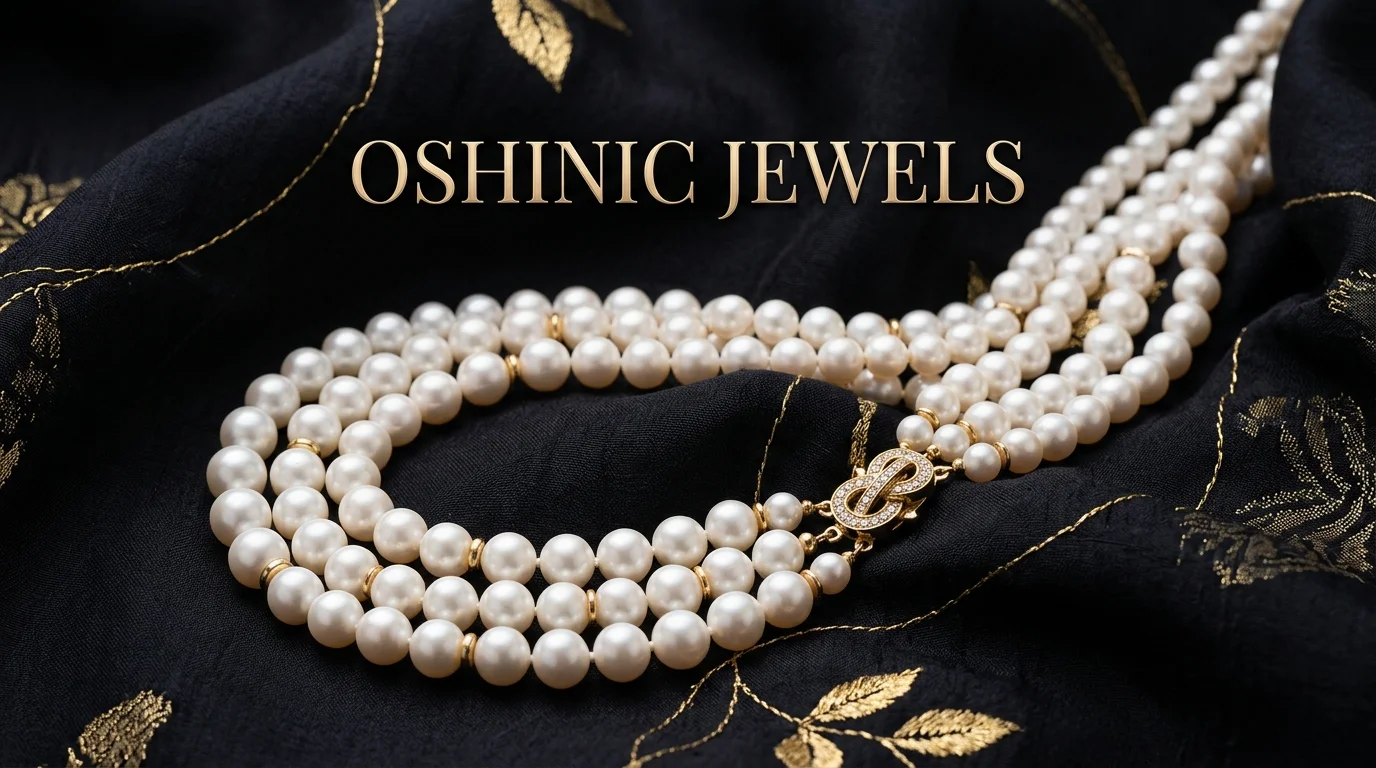
Genuine pearls are almost always strung on silk or nylon with a knot between each pearl, which prevents them from rubbing and stops a broken strand from scattering. The clasp on a real strand is typically gold, sterling silver, or platinum, and it will be stamped so.
Comparison Table: Real, Cultured, and Imitation Pearls
| Feature | Natural Pearl | Cultured Pearl | Imitation Pearl |
|---|---|---|---|
| Tooth test | Gritty | Gritty | Smooth (usually) |
| Origin | Forms without human help | Nucleus implanted by farmer | Fully manufactured |
| Material | 100% nacre throughout | Nacre over a bead nucleus | Glass, plastic, resin, or ground shell |
| Surface flaws | Present | Present | Rare or absent |
| Luster | Deep, internal glow | Deep, internal glow | Flat, surface-level shine |
| Drill hole | Clean, sharp edge | Clean edge, visible nacre layer | Chipping or flaking coating |
| Rarity | Extremely rare | Widely available | Mass produced |
| Typical price | Very high to auction level | Moderate to high | Low |
| Lab verification | X-ray radiography required | X-ray radiography confirms | Immediately obvious to a lab |
When to Skip Home Testing and Get a Lab Report
Home tests are for triage. Once the value at stake crosses a few hundred dollars, or once anyone uses the word "natural," you need documentation. A gemological laboratory can determine whether a pearl is natural or cultured, whether its color is natural or treated, and in many cases where it came from.
The critical technique is X-ray radiography, which images the internal growth structure. A cultured pearl reveals a distinct nucleus with a nacre layer around it. A natural pearl shows concentric growth rings with no implanted bead. No amount of surface testing can substitute for this, because the outside of both looks and feels identical.
Buying Guide: What Actually Drives Pearl Value
Once authenticity is settled, quality determines price, and the two are not the same question. Six factors matter most: luster, surface cleanliness, shape, color, size, and matching. Luster outranks everything else. A slightly blemished pearl with exceptional glow will almost always look better and hold value better than a flawless pearl with dull, chalky surface reflection.
Nacre thickness deserves special attention because it determines lifespan. Thin-nacre pearls, most common in cheaper Akoya production, can wear through to the bead nucleus within years of regular wear, leaving a visible bald patch. Thicker nacre resists this and generally shows richer luster from the start.
Common Mistakes Buyers Make
The most frequent error is treating a smooth result as definitive proof of a fake. Between skin oils, worn nacre, and buffed surfaces, plenty of genuine pearls fail the tooth test on the first attempt. Clean the pearl and retest before you conclude anything.
The second mistake is testing only one pearl. Mixed strands are common in the estate market, and a single sample tells you about a single bead.
Care Guide: Protecting the Nacre You Just Verified
The same softness that makes the tooth test possible makes pearls vulnerable. Nacre is porous and reacts to acids, alcohol, and solvents, all of which are present in perfume, hairspray, cosmetics, and household cleaners.
Follow the old rule: pearls go on last and come off first. Apply everything else, let it dry, then put the jewelry on. After each wear, wipe the pearls with a soft, slightly damp cloth to remove skin oils, and let them dry fully before storage.
Frequently Asked Questions
1. Does the tooth test damage real pearls?
A few light strokes will not cause visible harm. The risk comes from pressure and repetition. Nacre is soft, around 2.5 to 4.5 on the Mohs scale, so grinding a pearl hard against enamel repeatedly can dull the surface over time. Use light contact, test two or three pearls rather than the whole strand, and avoid retesting the same piece regularly.
2. Why does my real pearl feel smooth?
Three common reasons. Skin oil, lotion, or hairspray has coated the surface, so wipe it clean and retest. Decades of wear have polished the platelet edges flat, which is normal in heirloom pieces. Or the pearl has been buffed during a previous cleaning or restringing.
3. Can fake pearls pass the tooth test?
Yes. Shell-based imitations, sometimes labeled shell pearls, mother-of-pearl beads, or Majorica-style pearls, are made from ground shell material and can produce a faint grittiness. The sensation is usually more uniform and less distinct than genuine nacre, but the difference is subtle for a first-time tester.
4. Are cultured pearls real pearls?
Yes. A cultured pearl is grown inside a living oyster or mussel after a technician implants a nucleus. The mollusk then deposits genuine nacre around it exactly as it would around a natural irritant. The nacre is real, biologically produced material, not a coating.
5. How can I tell a natural pearl from a cultured pearl at home?
You cannot, reliably. Both are made of nacre and both feel gritty, look lustrous, and show surface character. The difference is internal: a cultured pearl contains an implanted bead nucleus, while a natural pearl shows concentric growth rings throughout. Only X-ray radiography at a gemological laboratory can reveal this.
6. What does a fake pearl look like under magnification?
Under a 10x loupe, a coated imitation typically shows a grainy, sprayed texture, sometimes resembling eggshell or fine spray paint, with a continuous film and no layered structure. At the drill hole you may see the coating chipping away, a visible paint edge, or exposed white plastic or clear glass.
7. Is the fingernail test as good as the tooth test?
No. Fingernails are smoother and less rigid than tooth enamel, so they glide over the microscopic platelet edges instead of catching on them. You will often feel nothing at all on a genuine pearl.
8. Do real pearls feel cold when you first put them on?
Usually, yes. Nacre draws heat away from your skin, so a real pearl feels cool for the first two to three seconds before warming to body temperature. Plastic imitations start at room temperature and never produce that chill.
9. Are heavier pearls always real?
No. Plastic and resin imitations feel noticeably light for their size, which is a useful signal. But glass-based fakes can be heavier than genuine pearls, so unusual heft is not proof of authenticity either.
10. Why are some real pearls not perfectly round?
Because they grew inside a living animal. Roundness depends on the nucleus, the mollusk's health, water conditions, and how evenly nacre was deposited. Freshwater pearls are frequently off-round, oval, drop-shaped, or baroque.
11. Does a high price guarantee a pearl is real?
No. Well-made imitations are sold at surprisingly high prices, particularly in tourist markets and unregulated online listings, while genuine freshwater pearls can be very affordable.
12. Should I get my pearls appraised or certified?
Get a laboratory report if the pearls are claimed to be natural, if you are buying a significant South Sea or Tahitian piece, if you inherited a strand with no provenance, or if you plan to insure or resell.
13. How do I keep real pearls from wearing out?
Put them on last, after perfume, hairspray, and cosmetics have dried, and take them off first. Wipe them with a soft, slightly damp cloth after each wear to remove skin acids. Store them in a soft pouch away from harder gemstones.
Final Verdict
The tooth test earns its reputation, with limits. As a free, instant screen that separates nacre from lacquer-coated plastic, nothing else comes close for speed. Anyone sorting through inherited jewelry, browsing an estate sale, or checking a flea market strand should absolutely use it. It will catch the majority of cheap imitations in seconds.
Who should rely on it: casual buyers, gift shoppers, and anyone triaging a box of unknown jewelry where the stakes are modest. Who should not: buyers evaluating natural pearl claims, high-value South Sea or Tahitian strands, or anything being insured or resold. In those cases the test is simply the wrong tool, and a gemological laboratory report is the only responsible answer.
Its biggest strength is accessibility. No equipment, no expertise, no cost. Its biggest weaknesses are the inability to distinguish natural from cultured pearls and the subtle ways modern shell imitations can produce false positives. Used as a quick first check combined with drill hole inspection, luster evaluation, and weight checks, the tooth test gives you an immediate head start. When tens of thousands of dollars or natural pearl claims are involved, always pair your eyes and teeth with a certified GIA or laboratory gemological report.
Sources & Methodology
This article was researched and written in accordance with the Oshinic Jewels Editorial Policy. Claims regarding gemstone quality, metal durability, pricing, sizing, and skin health were independently verified against the following authoritative industry standards:
- American Academy of Dermatology (AAD): Clinical guidelines for earlobe hygiene, contact dermatitis, and piercing care. View AAD Guidelines
- Association of Professional Piercers (APP): Body piercing hygiene, aftercare standards, and biocompatible metals. View APP Standards
- Jewelers of America (JA): Standard consumer care and cleaning guidelines for fine jewelry. View Standards
- Federal Trade Commission (FTC): Jewelry Guides & Hypoallergenic Definitions. View FTC Guides
- Oshinic Jewels: Independent Jewelry Research, Metallurgy Testing & Editorial Methodology. View Editorial Policy