Structural Integrity in Ring Design
Rings endure more physical trauma than any other category of jewelry. They are subjected to constant impact, friction against hard surfaces, and exposure to chemicals. Therefore, when we evaluate rings, our primary focus is structural integrity. The shank thickness, the quality of the solder joints, and the security of the settings are paramount. A visually stunning ring with a paper-thin shank will inevitably warp or crack under normal daily wear. We analyze the differences between die-struck rings, which offer superior metal density, and cast rings, which are more common but require careful quality control to avoid internal porosity.
Stackable Rings and Wear Patterns
The trend of stackable rings demands a specific approach to metal compatibility. We observe that wearing rings of different hardness levels on the same finger accelerates wear. For instance, a platinum ring will eventually abrade and wear down an adjacent 14k gold ring due to the immense difference in density and hardness. We guide buyers on how to build structurally sound stacks, emphasizing flush fits and complementary metal choices to prevent premature degradation of the shanks and prongs.
Gemstone Settings and Security
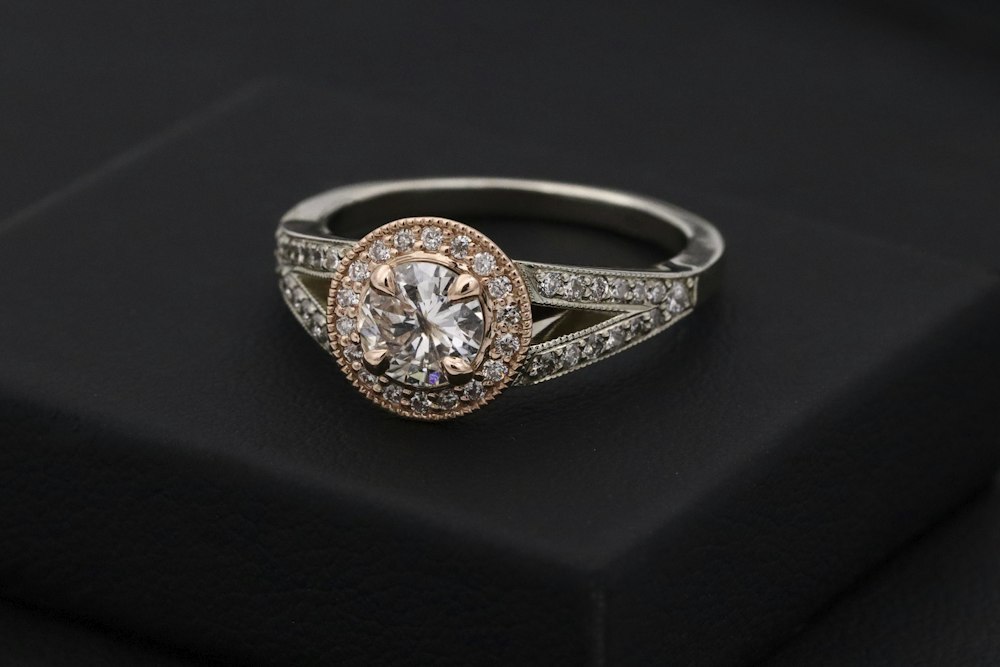
The setting dictates both the aesthetic and the security of the central gemstone. We rigorously evaluate the mechanics of prong, bezel, and channel settings. Four-prong settings maximize light return but leave the stone vulnerable; six-prong settings provide necessary security for larger diamonds. Bezel settings, wrapping the entire perimeter of the stone in metal, offer the ultimate protection for fragile gems like emeralds or opals but limit light dispersion. Our guides dissect these engineering trade-offs so you can choose a setting that matches your lifestyle risk.
Alternative Materials and Black Jewelry
We are tracking a significant rise in alternative ring materials, particularly in the men's segment and modern fashion pieces. Tungsten carbide and titanium offer extreme scratch resistance but cannot be resized, rendering them disposable if finger sizes change. We also investigate the surge in black jewelry, dissecting the methods used to achieve this look—from fragile black rhodium plating over gold to deeply durable black ceramic and PVD coatings. Understanding these material sciences prevents costly purchasing errors.