Losing a necklace: A hard lesson learned
i recall the day i lost a simple gold chain my grandmother had given me : It was a tough lesson. The chain itself was fine, but the little clasp, which i'd ignored for years, gave up on me while i was walking through a parking lot. I didn't notice my neck felt empty until much later, and by then, my necklace could've been anywhere. It was gone, and that hurt. Since then, i've paid a lot more attention to jewelry clasps : Maybe too much, if i'm being honest.
People spend hours comparing gemstones, arguing about yellow gold versus white gold, and searching for the perfect ring shape. But the tiny device holding that expensive jewelry in place? most people never even look at it. That's a big mistake. A bad clasp can make you nervous every time you wear your favorite necklace. A well: Made one does its job quietly, year after year, without asking for attention.
The problem with cheap jewelry
so, why do some necklaces keep slipping off? why do some bracelets feel like a puzzle you need to solve every morning? the answer usually starts with the clasp. Most people think a clasp is just a small connector : A little hook, a spring, a simple closing mechanism. I used to think the same thing.
But after buying, wearing, repairing, and occasionally regretting some jewelry purchases, i've learned that the clasp often reveals the true quality of a piece. Here's what i've noticed: Cheap jewelry makers know where customers usually don't check. The necklace might shine beautifully under bright lights, the stones might sparkle, and the finish might look amazing in pictures. But turn it around, look at the clasp : You'd be surprised how often people miss this. That's where many corners get cut. Thin metal, a weak spring, sloppy construction, or a poor design can turn a pretty necklace into something frustrating within months.
A personal mistake
i made this mistake myself with a discounted silver bracelet i bought online. The pictures looked incredible, and the reviews seemed good enough. But three weeks later, the clasp stopped locking correctly. That's all it lasted : Three weeks. I learned a valuable lesson: Always test the clasp before buying a piece. I open it, close it, and check whether it feels solid or cheap. A good clasp should move smoothly, lock confidently, and make you feel like your jewelry is actually safe.
The spring ring clasp
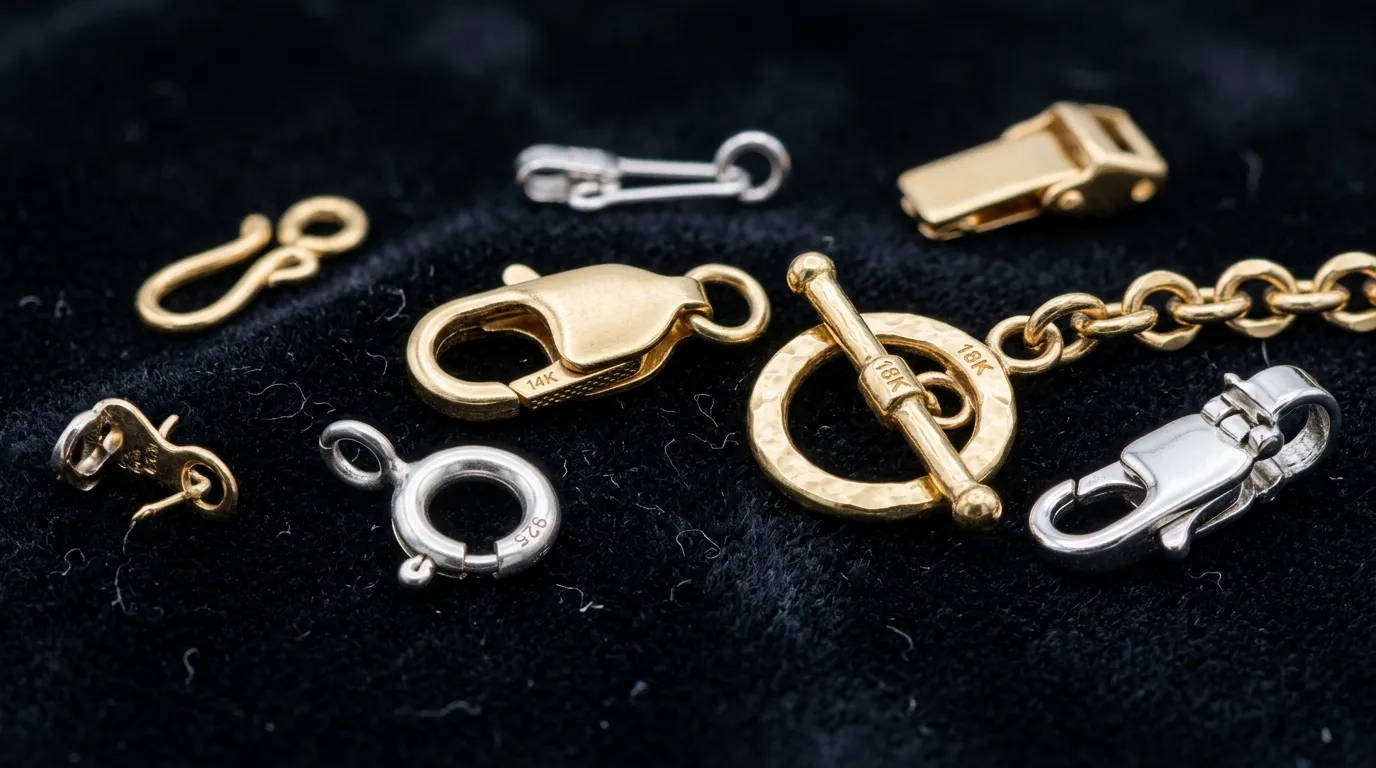
i've seen this firsthand: If you've ever owned a delicate necklace, chances are you've seen a spring ring clasp. It's the small round clasp with a tiny lever that pulls back a spring inside, creating an opening where the other side of the chain attaches. They're everywhere because they're inexpensive to make and don't distract from delicate jewelry designs. And honestly, i don't hate them : They're small, lightweight, and disappear nicely into thin chains. But here's the deal: I don't choose them for valuable jewelry. The spring inside can become weaker after years of use.
The tiny little lever can also be a nightmare for people with long nails or arthritis. And trying to attach one behind your neck? it's a challenge : Standing in front of the mirror for five minutes, turning the necklace around like you're solving some impossible escape: Room challenge. For inexpensive chains and small pendants, they work perfectly fine. But for something i'd cry over if i lost it? i'd choose a stronger option.
Pros and cons of spring ring clasps
here are the pros: They're small and barely noticeable, cheap to replace, work nicely on thin chains, and don't add extra weight. But there are cons too: They're hard to handle, the spring can wear down, and they're not the most secure choice available. They're also a poor match for heavier jewelry. So, while spring ring clasps have their uses, they're not my top choice for everyday wear.
Lobster clasps: A better option
if someone asked me to recommend only one clasp for daily wear, i'd probably answer lobster clasp before they even finished the question. It's a no: Brainer for most people. The clasp gets its name because its shape looks similar to a lobster claw. You press the small lever, the arm opens, and it snaps shut once you release it. Simple, effective, and reliable. One reason i like lobster clasps is the larger opening : They're much easier to connect than tiny spring rings, and the thicker body handles regular wear much better. I've got several silver and gold chains with lobster clasps that i've worn for years, and they've survived vacations, busy days, and me accidentally pulling them on sweaters. They're still working.
Why lobster clasps are a great choice
not every lobster clasp is amazing, of course : A cheap one can break just like any other cheap jewelry part. But a high: Quality lobster clasp gives excellent security, convenience, and value for the money. People Love them because they're easy to open and close, strong and durable, secure for everyday use, available in many sizes, and suitable for necklaces, bracelets, and anklets. No unnecessary drama : Just a clasp that works. That's what i want from my jewelry, and that's why i recommend lobster clasps to anyone who'll listen.
Sources & Methodology
This article was researched and written in accordance with the Oshinic Jewels Editorial Policy. Claims regarding gemstone quality, metal durability, pricing, sizing, and skin health were independently verified against the following authoritative industry standards:
- American Academy of Dermatology (AAD): Clinical guidelines for earlobe hygiene, contact dermatitis, and piercing care. View AAD Guidelines
- Association of Professional Piercers (APP): Body piercing hygiene, aftercare standards, and biocompatible metals. View APP Standards
- Jewelers of America (JA): Standard consumer care and cleaning guidelines for fine jewelry. View Standards
- Federal Trade Commission (FTC): Jewelry Guides & Hypoallergenic Definitions. View FTC Guides
- Oshinic Jewels: Independent Jewelry Research, Metallurgy Testing & Editorial Methodology. View Editorial Policy