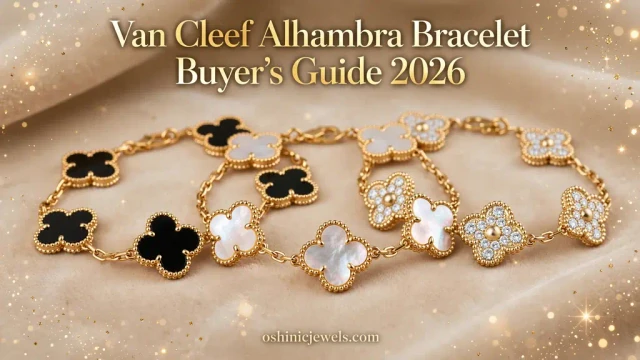
- Van Cleef Alhambra Bracelet Buyer’s Guide 2026
- What Is a Van Cleef Alhambra Bracelet?
- Collections, Materials, and Design Options
- How to Choose the Right Bracelet
- Authenticity and Safe Purchasing
- Condition, Resizing, and Pre-Owned Value
- Care, Storage, and Maintenance
- Common Buying Mistakes to Avoid
- Frequently Asked Questions
- Key Takeaways
- Final Verdict
- Conclusion
In our experience: To bring you the most accurate and practical advice, our certified gemologists personally test the methods and products discussed in our guides. Whether we're evaluating 12 different silver polishes, testing ultrasonic cleaners on various diamond settings, or examining lab-grown diamonds under 10x magnification, we rely on rigorous, hands-on testing in our own facilities.
Van Cleef Alhambra Bracelet Buyer’s Guide 2026
A Van Cleef Alhambra bracelet is one of the most recognizable pieces in modern luxury jewelry. Its repeating four-leaf-inspired motifs create a design that feels elegant without depending on a passing trend. Buyers can choose from understated gold models, colorful ornamental stones, diamond-set pieces, and designs with different motif sizes. That variety makes the collection appealing, but it also makes careful comparison essential.
Van Cleef & Arpels introduced the Alhambra design in 1968, and the collection has since become closely associated with the Maison. Its motifs are commonly described as symbols of luck, harmony, and fortune. Although the basic outline appears simple, authentic pieces involve precise stone cutting, polished gold borders, consistent beading, and carefully assembled links. These details help explain both the visual appeal and the premium price.
Buying one should involve more than choosing a favorite color. Natural materials can vary in appearance, durability, and maintenance requirements, while bracelet lengths may fit differently depending on wrist size and motif arrangement. The resale market introduces additional questions about condition, documentation, repairs, and authenticity. Understanding these issues helps you select a bracelet that suits your lifestyle rather than one that only looks attractive in photographs.
What Is a Van Cleef Alhambra Bracelet?
The Alhambra bracelet belongs to Van Cleef & Arpels’ broader Alhambra jewelry family, which includes necklaces, earrings, rings, watches, and other pieces. Most bracelets use one or more symmetrical motifs framed by polished precious metal. Five-motif bracelets are especially familiar, although single-motif and differently configured designs are also available. Exact choices change as the Maison introduces, discontinues, or reissues particular combinations.
The design is often called a clover, but its form is more accurately understood as a rounded quatrefoil. Each motif generally has four balanced lobes and a beaded or polished border, depending on the model. Some versions feature a stone or shell insert, while others use solid gold with textured or polished surfaces. Diamond-set models add brilliance but usually sit at a much higher price point.
Several Alhambra subcollections offer distinct proportions and styling. Vintage Alhambra is the classic choice and has a versatile motif size that works well for everyday wear. Sweet Alhambra uses smaller motifs for a lighter, more delicate appearance. Magic Alhambra plays with scale and may combine motifs of different sizes, creating a more expressive look.
Pure Alhambra has cleaner, smoother contours and a contemporary character. Lucky Alhambra incorporates playful symbols or colorful materials in addition to the traditional quatrefoil language. Limited editions and boutique-specific releases may also use unusual stones, color combinations, or commemorative details. Availability varies, so buyers should confirm current offerings directly with an authorized boutique.
The bracelet’s appeal comes from its balance of recognition and simplicity. It can be worn alone, paired with a watch, or layered with narrow bangles and chain bracelets. However, stacking requires care because harder jewelry can scratch gold or damage relatively delicate stone surfaces. Buyers who want a pristine bracelet may prefer to wear it separately.
Collections, Materials, and Design Options
The Vintage Alhambra five-motif bracelet is often the starting point for first-time buyers. It delivers the signature appearance without feeling as small as Sweet Alhambra or as dramatic as some Magic Alhambra designs. Five motifs also distribute visual interest around the wrist rather than concentrating it near the clasp. For many buyers, this makes the bracelet recognizable from multiple viewing angles.
Sweet Alhambra is better suited to people who prefer subtle jewelry or have smaller wrists. Its reduced motif size can feel less formal and may layer more easily with a slim watch. The tradeoff is that the smaller details may have less visual presence from a distance. Buyers should compare the collections in person whenever possible instead of relying entirely on enlarged product photographs.
Yellow gold gives the collection a warm, traditional luxury appearance. Rose gold has a softer blush tone that complements many neutral and warm skin tones, while white gold creates a cooler and more understated effect. Gold color should be chosen according to personal preference and existing jewelry rather than rigid rules about complexion. Mixing metal colors is also acceptable if it reflects the wearer’s style.
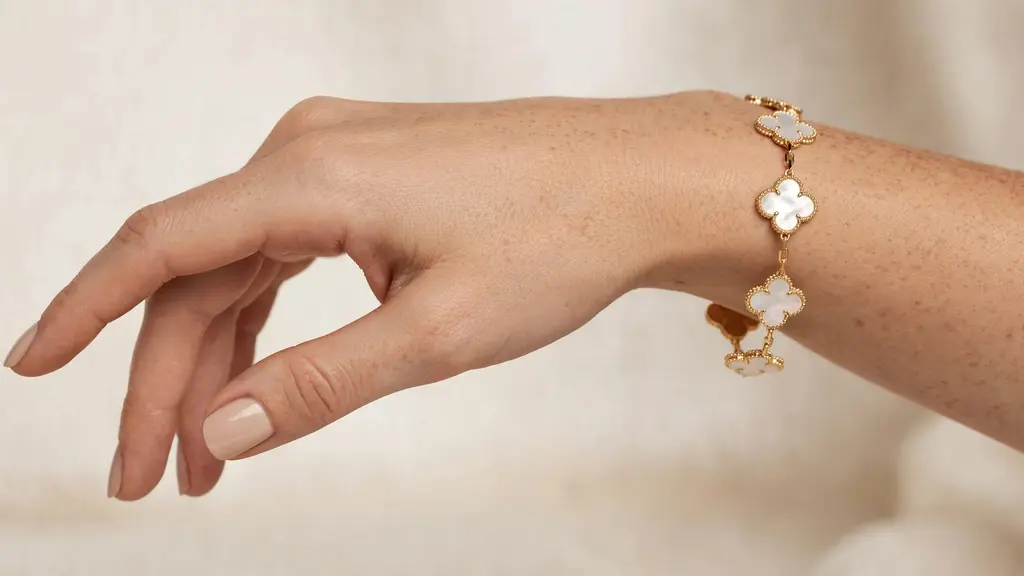
Mother-of-pearl is popular because of its luminous surface and subtle color changes. As a natural organic material, it can show variations in tone, pattern, and iridescence. It also requires thoughtful care because chemicals, prolonged moisture, abrasion, and impact may damage its surface. A mother-of-pearl bracelet can be suitable for regular wear, but it should not be treated like an indestructible metal bracelet.
Onyx creates a bold black-and-gold contrast and tends to coordinate easily with different clothing colors. Malachite offers dramatic green banding, but every piece looks different because the material naturally varies. Carnelian provides warm red-to-orange tones, while blue agate can create a cooler, vibrant appearance. Buyers should inspect the actual bracelet when possible because natural stones rarely look identical to online samples.
Diamond and solid-gold versions may be more practical for buyers who do not want ornamental stone inserts, although all fine jewelry still requires care. Textured gold, including guilloché-style designs, reflects light beautifully but can show scratches and surface wear. Diamond models bring additional sparkle and may transition well into formal settings. Their higher price makes documentation, condition, and seller credibility especially important.
## Alhambra Materials Compared
| Material | Visual Character | Practical Consideration | Best Suited For |
|---|---|---|---|
| Mother-of-Pearl | Soft, luminous iridescence | Sensitive to chemicals, abrasion, and moisture | Elegant everyday wear |
| Onyx | Bold black contrast | Protect from impacts and scratches | Classic, high-contrast styling |
| Malachite | Rich green with natural banding | Natural variation; handle with care | Buyers who want vibrant color |
| Carnelian | Warm red-orange tones | Natural color variations | Warm-toned jewelry collections |
| Guilloché Gold | Bright, reflective finish | Surface scratches become more visible | Buyers avoiding gemstone inserts |
| Diamond | Brilliant sparkle | Higher price and authentication needs | Luxury collectors and milestone gifts |
A new Van Cleef Alhambra bracelet can cost several thousand dollars, while diamond-set, rare-material, or limited models may cost substantially more. Retail pricing changes over time and differs by design, metal, stone, taxes, and market. For that reason, a buyer’s guide should not treat any quoted price as permanent. The official Van Cleef & Arpels website or boutique is the best source for current retail pricing.
Material does not affect price in a perfectly predictable way. Diamonds generally increase cost, but scarcity, craftsmanship, collection, and market demand also matter. Certain discontinued stone-and-metal combinations can command strong resale prices even when they originally cost less than current diamond pieces. Buyers should compare the exact reference rather than assuming that all five-motif bracelets share a similar value.
A realistic budget must include sales tax, insurance, potential resizing, and future maintenance. Pre-owned purchases may also involve authentication or inspection expenses. International purchases can introduce duties, shipping charges, currency conversion, and complicated return procedures. A lower advertised price may therefore produce a higher total cost.
Boutique purchases typically offer the clearest route to provenance and current product support. Buyers can inspect the bracelet, discuss fit, learn care instructions, and receive the packaging and documentation supplied with the purchase. Availability can be limited for popular combinations, and discounts are generally not the defining feature of luxury-boutique shopping. The main benefits are confidence, service, and a direct relationship with the brand.
Pre-owned bracelets may offer savings or access to discontinued designs. Their value depends on authenticity, condition, age, included accessories, service history, and seller reputation. Original packaging and paperwork can support provenance, but they do not independently prove authenticity because those items can be separated from the bracelet or reproduced. The jewelry itself must still be evaluated.
Extremely low pricing should trigger caution. Counterfeit products may copy the general shape, hallmarks, packaging, and even serial-style markings. A seller’s claim that an item was a gift or that documentation was lost does not establish legitimacy. If the price only makes sense when every warning sign is ignored, walking away is usually the safest decision.
How to Choose the Right Bracelet
Begin by deciding how often and where the bracelet will be worn. A buyer who wants a daily piece may prioritize versatility, manageable maintenance, and compatibility with work or casual clothing. Someone shopping for an anniversary or formal event may prefer diamonds, a distinctive stone, or a limited design. Collectors may care more about rarity, reference history, and condition.
Next, consider color as part of an existing wardrobe. Black onyx is easy to coordinate, while mother-of-pearl offers a softer neutral appearance. Malachite, carnelian, and blue agate create stronger color statements and may become the focal point of an outfit. The best choice is not necessarily the most popular one but the material the owner will genuinely wear.
Examine natural material variation before committing. Malachite can show straight, curved, broad, or fine banding, and mother-of-pearl can shift from white to cream with pink, green, or blue reflections. Carnelian may appear more orange, red, brown, translucent, or opaque under different lighting. These variations are part of natural materials rather than automatic signs of poor quality.
Bracelet fit affects both comfort and safety. A close fit limits movement but may feel restrictive, while a loose fit moves attractively yet can catch on objects or strike hard surfaces. Measure the wrist with a flexible tape where the bracelet will sit, then compare that measurement with the official listed length. Whenever possible, try the exact collection because motif size and link construction influence how a bracelet feels.
Buyers should also examine the clasp. It should operate securely without feeling improvised, loose, or unusually rough. Confirm that the bracelet can be fastened comfortably without assistance if it will be worn frequently. A beautiful bracelet that remains in its box because the clasp is frustrating is not a practical purchase.
Finally, think about future preferences. A highly colorful bracelet may be ideal for a collector but less versatile as a first luxury purchase. A neutral model can be easier to wear but may not feel distinctive enough for someone who already owns similar jewelry. Choose for the intended wearer rather than for social-media popularity or assumed resale performance.
Authenticity and Safe Purchasing
The safest place to purchase a new Alhambra bracelet is directly from Van Cleef & Arpels or an authorized sales channel. The pre-owned market requires greater scrutiny because counterfeiters continually improve visual imitations. No single hallmark, serial number, receipt, box, or online photograph can guarantee authenticity. Evaluation should consider the bracelet, documentation, seller, and transaction together.
Authentic workmanship should appear precise and balanced. Motifs should look consistently shaped, borders should be carefully finished, and links should move as intended without obvious roughness. Stone or shell inserts should fit correctly rather than showing careless gaps or adhesive residue. These observations can identify concerns, but they are not a substitute for qualified authentication.
Hallmarks and identifying marks should be clean and appropriate for the model, metal, and production period. Counterfeit pieces can include convincing-looking marks, while authentic older jewelry may show wear or service-related differences. Comparing an item with random internet photographs is unreliable because images may show other references or counterfeit products. Use an experienced professional familiar with Van Cleef & Arpels jewelry.
Evaluate the seller as carefully as the bracelet. A reputable pre-owned dealer should provide clear photographs, an accurate condition report, written authenticity terms, a return policy, and secure payment options. Ask whether the item has been altered, polished, repaired, resized, or serviced. Also ask who performed the work and whether replacement parts are original.
Avoid irreversible payments when buying from an unfamiliar person. Wire transfers, cryptocurrency, cash-equivalent apps, and off-platform transactions may offer limited recourse. Marketplace protection can be useful only when the transaction follows the platform’s rules. Save the listing, messages, invoice, photographs, and payment records until the return period has passed.
Meet-up transactions carry additional personal and financial risks. If an in-person purchase is unavoidable, use a secure public location and arrange independent examination before payment. Do not allow urgency, a dramatic backstory, or claims of competing buyers to replace due diligence. A legitimate bracelet will still require legitimate verification.
Condition, Resizing, and Pre-Owned Value
Condition descriptions can be subjective, so request close photographs under neutral lighting. Look at the front and back of every motif, the edges, chain links, clasp, jump rings, hallmarks, and areas where metal components touch. Ask specifically about scratches, dents, chips, cracks, discoloration, loose elements, and previous polishing. A vague description such as “excellent for its age” is not enough.
Polishing can improve appearance by reducing surface marks, but it also removes a small amount of metal. Repeated or aggressive polishing may soften edges, alter texture, or reduce the crispness of fine details. Collectors sometimes prefer honest light wear over a heavily refinished surface. Ask whether the bracelet has been polished and inspect the definition of its borders.
Ornamental stones and organic materials deserve close attention. A chip near a drilled area or setting edge may worsen with continued wear. Scratches can affect how light moves across mother-of-pearl, while a damaged malachite insert may be difficult or expensive to match. Replacement feasibility and cost should be investigated before buying a compromised bracelet.
Bracelet length can sometimes be adjusted, but the available options depend on the design. Adding or removing links may affect motif spacing and overall symmetry. Work performed outside an authorized service channel could also influence future service options or resale appeal. Confirm the bracelet’s current length and alteration history before purchase.
Pre-owned value depends on more than age. Desirable references, strong condition, original components, documentation, and recognizable material combinations can support demand. Fashion cycles and supply also influence pricing, so no bracelet should be treated as a guaranteed investment. Buy primarily for enjoyment unless you have specialized market knowledge and can accept potential losses.
Insurance may be appropriate for a high-value bracelet. Homeowners or renters policies often impose limits on jewelry coverage, particularly for loss or mysterious disappearance. A scheduled jewelry policy may provide broader protection, depending on its terms. Review exclusions, deductibles, valuation requirements, and replacement procedures rather than assuming all policies work alike.
Care, Storage, and Maintenance
Remove an Alhambra bracelet before showering, swimming, exercising, gardening, or doing household work. Water alone is not the only concern; chlorine, salt, soap, cleaning products, sweat, impact, and abrasion can affect different materials. Cosmetics, perfume, sunscreen, and hairspray should be applied before putting on the bracelet. Allow products to dry so residue does not build up on the surface.
After wear, gently wipe the bracelet with a clean, soft, lint-free cloth. Avoid aggressive rubbing, especially on mother-of-pearl, malachite, or textured gold. Do not use an ultrasonic cleaner, steam cleaner, abrasive paste, or chemical jewelry dip unless the manufacturer specifically confirms that the method is safe for the exact model. A cleaning process suitable for plain gold may damage a delicate insert.
Store the bracelet separately in a soft-lined compartment or pouch. Diamonds and harder jewelry can scratch gold or softer ornamental materials when pieces rub together. Fasten the bracelet before storage to reduce tangling, but do not place tension on the chain. Keep the storage area away from extreme heat, moisture, and direct sunlight.
Inspect the clasp and links periodically. Stop wearing the bracelet if a link looks stretched, a motif feels loose, or the clasp no longer closes securely. Continuing to wear damaged jewelry can turn a manageable repair into a lost bracelet. Professional inspection is especially sensible before travel or an important event.
Stacking creates a fashionable look but increases contact damage. A watch case, diamond tennis bracelet, or rigid bangle may repeatedly strike the motifs. If stacking is important, separate pieces by position or choose combinations that do not grind against one another. Accept that regular layering may produce visible wear over time.
Keep invoices, service records, appraisals, and detailed photographs in a secure location. These documents can support insurance claims, future resale, and maintenance decisions. Photograph hallmarks and identifying details when the bracelet is acquired. Documentation cannot replace authenticity, but careful records improve responsible ownership.
Common Buying Mistakes to Avoid
The first common mistake is buying based only on popularity. A bracelet may look beautiful on influencers yet feel too delicate, colorful, or recognizable for the buyer’s lifestyle. Try different materials and motif sizes before deciding. Personal comfort and repeated wear matter more than online visibility.
Another mistake is ignoring maintenance requirements. Mother-of-pearl and ornamental stones should not be treated like plain metal. Buyers who rarely remove jewelry may be happier with a design that better matches their habits. Honest lifestyle assessment can prevent disappointment and accidental damage.
Some shoppers focus entirely on obtaining the lowest price. This approach can lead to counterfeits, undisclosed repairs, damaged stones, insecure payment methods, or sellers without meaningful return policies. Compare total value rather than the headline price. Provenance, condition, service, and transaction protection are worth paying for.
Buying the wrong size is also common. A bracelet that is too loose can rotate excessively or catch on objects, while one that is too tight may strain the links. Do not assume that a standard length will suit every wrist. Measure first and confirm what resizing is realistically available.
Collectors sometimes overvalue packaging. A box, certificate, shopping bag, or receipt may improve completeness, but none should outweigh the bracelet’s physical evidence and seller history. Accessories can be purchased separately or counterfeited. Treat them as supporting materials rather than conclusive proof.
Finally, avoid treating an Alhambra bracelet as a guaranteed financial asset. Certain references may retain value well, but resale prices depend on changing demand, condition, selling fees, and market timing. Jewelry can carry emotional and aesthetic value without producing a financial return. Purchase within a comfortable budget and prioritize long-term enjoyment.
Frequently Asked Questions
Is a Van Cleef Alhambra bracelet worth buying?
It may be worth buying if you appreciate the design, craftsmanship, brand history, and recognizable style. The collection offers many materials and sizes, making it easier to find a piece that suits different wardrobes. However, the premium price includes brand value, and delicate materials require care. It is not the right purchase for someone seeking maximum gold weight or a guaranteed investment return.
Which Alhambra bracelet is best for a first-time buyer?
A Vintage Alhambra five-motif bracelet in a neutral material is a popular first choice because it offers the classic design and broad styling versatility. Onyx provides strong contrast, while mother-of-pearl creates a softer appearance. Solid or textured gold may appeal to buyers who prefer avoiding ornamental stone inserts. The best option depends on maintenance habits, budget, wrist size, and existing jewelry.
Can an Alhambra bracelet be worn every day?
Many owners wear Alhambra bracelets regularly, but daily suitability depends on the material and activities involved. Remove the bracelet before swimming, showering, exercising, sleeping, or handling household chemicals. Mother-of-pearl, malachite, and similar materials need particular care. Regular wear will also create surface marks, so buyers seeking a flawless appearance may reserve the bracelet for selected occasions.
Is mother-of-pearl durable enough for a bracelet?
Mother-of-pearl can be worn successfully when handled thoughtfully, but it is not as carefree as plain gold. Its surface may be affected by abrasion, chemicals, impact, and prolonged moisture. Apply perfume and cosmetics before wearing the bracelet, then wipe it gently after use. Store it separately from harder jewelry and follow the manufacturer’s care guidance for professional cleaning.
How can I tell whether an Alhambra bracelet is authentic?
There is no reliable one-step authenticity test. Review workmanship, proportions, hallmarks, materials, clasp construction, provenance, seller reputation, and transaction terms together. Packaging and serial-style marks are not sufficient because they may be copied. The safest approach is buying from the brand, an authorized channel, or a reputable pre-owned specialist offering qualified authentication and a written return policy.
Do Van Cleef Alhambra bracelets hold their value?
Some Alhambra bracelets show strong pre-owned demand, particularly desirable references in excellent condition. However, resale value changes with fashion, availability, material, condition, documentation, fees, and economic conditions. A seller may receive considerably less than a dealer’s advertised price. Buyers should view value retention as a possible benefit rather than a promise and purchase primarily because they want to wear the bracelet.
Can an Alhambra bracelet be resized?
Some bracelets may be adjusted by adding or removing links, but options depend on the model and desired final length. Alterations can affect spacing, symmetry, service eligibility, and resale appeal. Contact Van Cleef & Arpels or an appropriately qualified specialist before authorizing work. When buying pre-owned, ask whether the bracelet was previously resized and request its exact current measurement.
Can I stack an Alhambra bracelet with a watch?
Yes, but stacking can produce scratches and impact damage. Watch cases, metal bracelets, diamonds, and rigid bangles may repeatedly strike the motifs or chain. Leave space between pieces when possible, or wear them on opposite wrists. If you choose direct stacking, expect normal wear and inspect the links and clasp periodically for signs of stress.
What is the difference between Sweet and Vintage Alhambra?
Sweet Alhambra generally uses smaller, more delicate motifs, creating a subtle appearance that works well on smaller wrists or in layered combinations. Vintage Alhambra uses the classic medium-sized motif and has greater visual presence. Neither is universally better. Try both sizes because product photographs can make the smaller Sweet motif appear larger than it looks in person.
Why do Alhambra stone colors vary?
Many inserts come from natural ornamental or organic materials, so their color, pattern, translucency, and surface character can vary. Malachite has distinctive banding, mother-of-pearl shows changing iridescence, and carnelian can range from orange-red to deeper brownish tones. Variation is expected, but damage and poor workmanship are not. Inspect the specific bracelet rather than assuming it will match a stock photograph.
Should I buy new or pre-owned?
Buy new if direct provenance, boutique service, current packaging, and simpler authentication are priorities. Consider pre-owned if you want a discontinued reference, broader selection, or potential savings. A pre-owned purchase requires careful condition assessment, seller verification, secure payment, and a meaningful return policy. Compare the final cost after authentication, insurance, taxes, shipping, and possible repair.
Does an original box prove authenticity?
No. Boxes, certificates, receipts, and shopping bags can be lost, separated from the original jewelry, sold independently, or reproduced. They may support provenance when all details are consistent, but they cannot authenticate the bracelet alone. Evaluate the actual piece and seller history. If concerns remain, obtain qualified authentication before the return period expires.
Key Takeaways
- Choose the Alhambra collection, motif size, metal, and material according to the wearer’s lifestyle rather than popularity alone.
- Verify the bracelet’s exact length and try it on whenever possible before considering resizing.
- Buy through Van Cleef & Arpels or a reputable pre-owned seller with clear authenticity and return terms.
- Treat packaging and paperwork as supporting evidence, not definitive proof of authenticity.
- Protect mother-of-pearl and ornamental stones from chemicals, moisture, abrasion, and impact.
- Include taxes, insurance, authentication, maintenance, and possible repairs in the total budget.
- Do not assume that a luxury bracelet will produce a guaranteed investment return.
Final Verdict
A Van Cleef Alhambra bracelet is best for buyers who appreciate recognizable design, refined craftsmanship, and jewelry that can move between casual and formal outfits. The collection’s greatest strength is variety: shoppers can choose discreet or bold motifs, several gold colors, ornamental stones, textured gold, or diamonds. Its long-established visual identity also makes it easier to coordinate with other Alhambra pieces.
The main weaknesses are price, counterfeit risk, and the care required by certain materials. Buyers who never remove their jewelry, regularly expose it to water or chemicals, or dislike visible signs of wear may find some versions impractical. Those focused mainly on intrinsic gold or gemstone value may also prefer less brand-dependent jewelry.
For most first-time buyers, a classic five-motif design in a versatile material provides the strongest balance of recognition and wearability. Purchase directly from the Maison when possible, or use a reputable pre-owned specialist with transparent authentication and return policies. The right Alhambra bracelet should fit comfortably, complement the owner’s wardrobe, and remain financially comfortable after insurance and maintenance costs.
Conclusion
Buying a Van Cleef Alhambra bracelet is both an aesthetic and practical decision. Collection, material, color, fit, condition, authenticity, maintenance, and total cost all deserve consideration. Taking time to compare these factors helps prevent an expensive impulse purchase and leads to a bracelet that receives regular wear.
Natural variation gives many Alhambra bracelets their individual character, but it also makes examining the actual piece important. Buyers should understand how their preferred material responds to moisture, chemicals, impact, and everyday abrasion. Proper storage and timely inspection help preserve the bracelet’s appearance and security.
Above all, buy from a trustworthy source and choose the bracelet for personal enjoyment. Brand recognition and resale demand can add appeal, but neither should replace comfort, suitability, and responsible budgeting. A carefully selected Alhambra bracelet can become a versatile signature piece or a meaningful gift that remains relevant for years.
References
- Van Cleef & Arpels. Official Alhambra Collection. https://www.vancleefarpels.com/
- Gemological Institute of America (
Disclosure: As an independent publisher, we may earn a commission if you purchase through links on this page, at no extra cost to you. We only recommend products we have rigorously tested.
GIA). Gem Encyclopedia & Jewelry Education. https://www.gia.edu/- Federal Trade Commission (FTC). Guides for the Jewelry, Precious Metals, and Pewter Industries. https://www.ftc.gov/
- Responsible Jewellery Council (RJC). Responsible Jewellery Council Standards. https://www.responsiblejewellery.com/
Based on our extensive gemological testing and market analysis, we recommend focusing on build quality and certified materials over brand names. If you're deciding between these options, prioritize the one that offers the best structural integrity for your daily wear habits. When in doubt, sterling silver and solid gold offer the best long-term value.
Join the Inner Circle
Get exclusive jewelry buying tips, market insights, and access to private sales delivered straight to your inbox.
We respect your privacy. No spam, ever.