The Mechanics of Chain Link Structures
Chains are feats of micro-engineering. They are composed of hundreds of individual interlocking metal elements designed to provide fluid flexibility while maintaining immense tensile strength. When we analyze chains, we strip away aesthetic preferences to focus entirely on structural durability. Not all chain types are created equal; some are robust enough to tow a car (metaphorically), while others will kink, snap, or crush under minimal stress. We categorize chains strictly by their mechanical reliability.
High-Durability Structures: Box, Wheat, and Cable
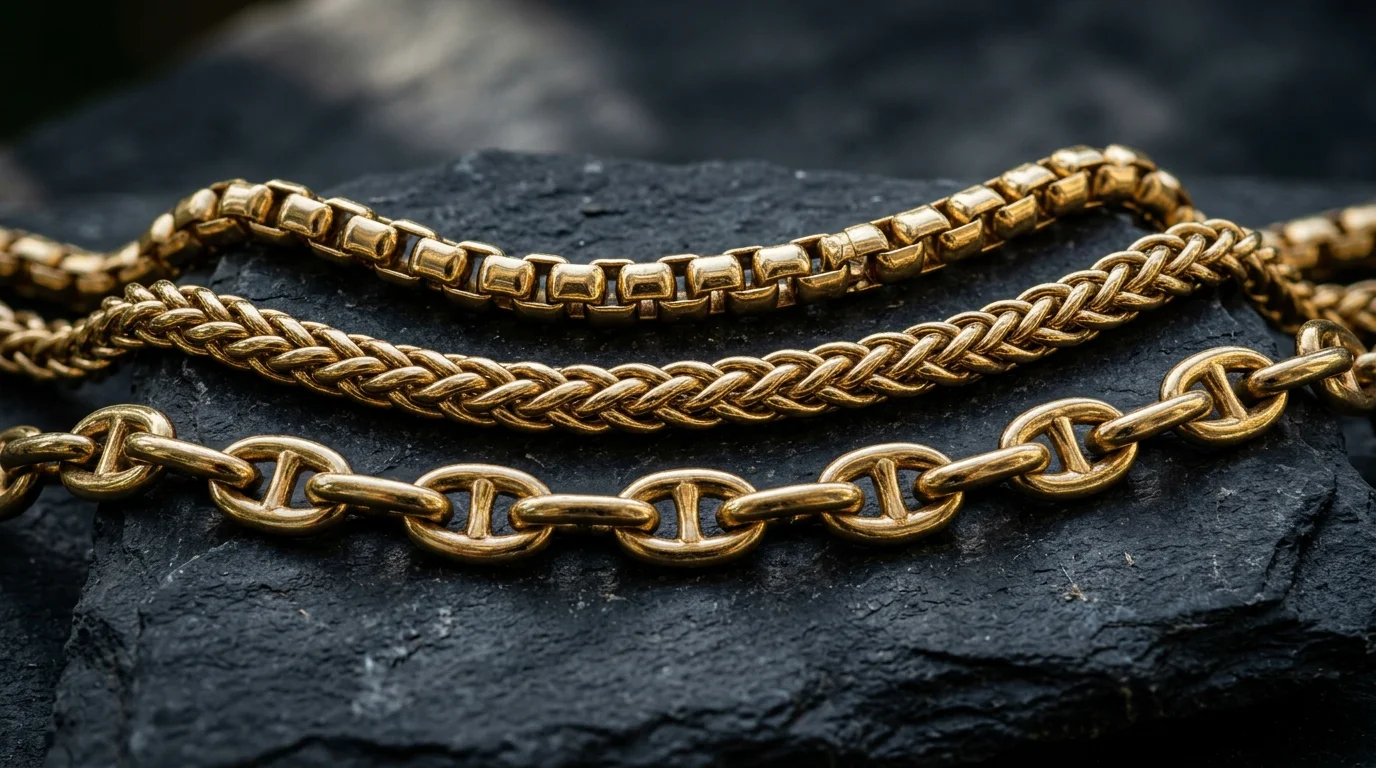
For daily wear, particularly when supporting heavy pendants, we mandate chains with independent, fully soldered links. The cable chain, consisting of identical interlocking ovals, is the baseline of reliability. However, we highly recommend the wheat chain and the box chain for superior strength. The wheat chain uses deeply interwoven teardrop links that provide incredible fluid strength, while the box chain uses square links that sit flush against each other. If a single link fails in these structures, the chain typically holds together long enough to reach a jeweler.
High-Risk Structures: Herringbone, Snake, and Omega
We issue severe warnings regarding rigid or semi-rigid chain structures like the herringbone, snake, and omega chains. These are not constructed from interlocking loops, but from tightly compressed metal plates or tubes over a central wire. They have 'metal memory.' If you bend a herringbone chain beyond its tolerance—by sleeping in it, or catching it on a collar—it will permanently kink. These kinks cannot be fully repaired, rendering the chain useless. We advise these styles only for cautious, occasional wear.
Solid vs. Hollow Fabrication
The most critical evaluation of a chain involves its weight and density. The market is flooded with hollow gold chains, which offer massive volume for a fraction of the gold price. We emphatically advise against them for daily wear. Hollow chains stretch easily, dent upon impact, and when a link breaks, the hollow tubing is nearly impossible to solder back together seamlessly. A solid chain is a quantifiable investment in structural integrity, designed to last decades rather than months.