Key Takeaways
- Durability: 14k gold is vastly superior for active lifestyles and securely holding large diamonds.
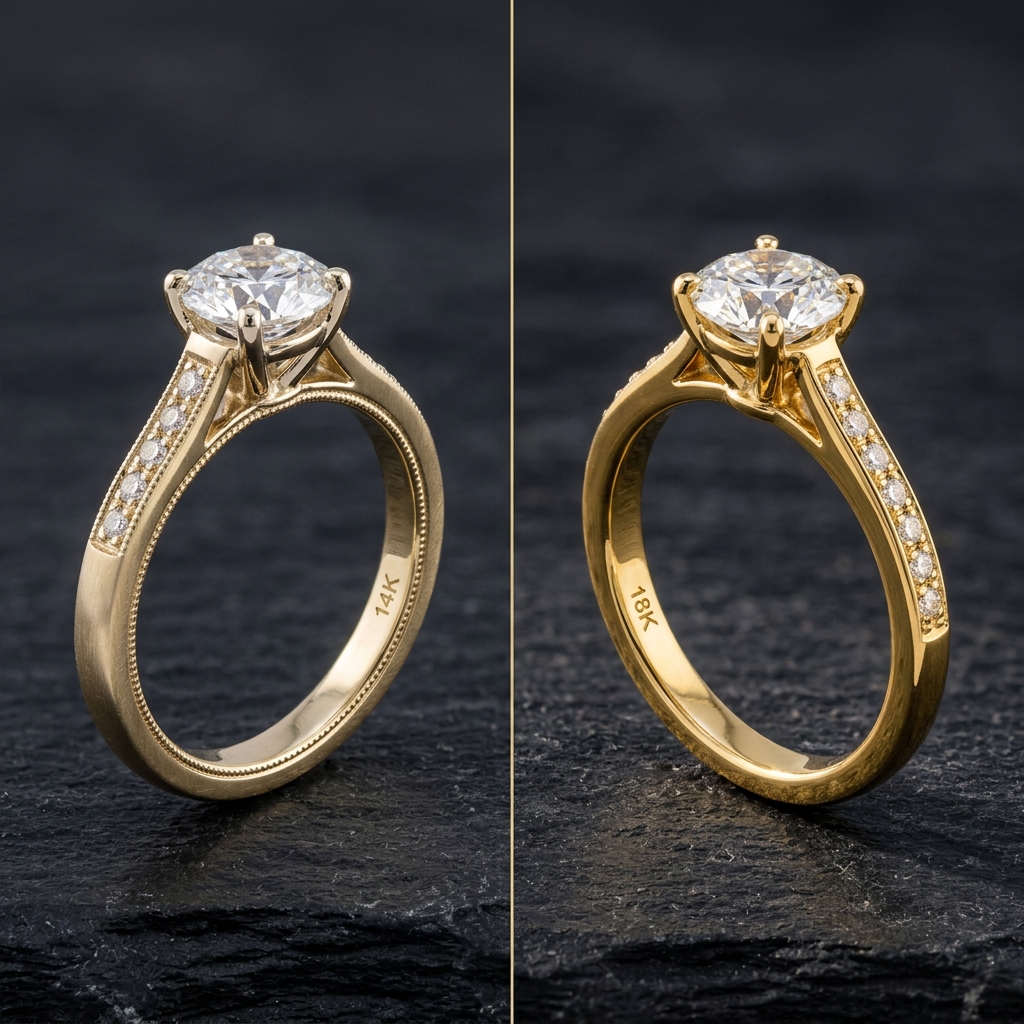
- Aesthetics: 18k yellow gold provides a deep, buttery, old-world luxury hue that 14k cannot replicate.
- Price: Upgrading to an 18k gold setting typically increases the ring's price by 30% to 50%.
- White Gold Secret: Because white gold is rhodium-plated, 14k and 18k white gold look completely identical to the naked eye.
Introduction
When it comes to buying a luxury engagement ring, the gemstone gets all the attention. But the metal that holds that stone is equally critical. You are about to invest thousands of dollars into a piece of fine jewelry meant to last a lifetime. The moment you step into a jeweler's showroom or browse online, you are immediately faced with the choice: 14k gold or 18k gold.
The distinction between the two is not just about price. It fundamentally alters the ring's durability, color saturation, and maintenance requirements over the next fifty years of daily wear. This guide strips away the marketing jargon to explain the exact scientific and aesthetic differences between 14-karat and 18-karat gold, giving you the raw data you need to choose the perfect setting.
What is the Difference? (The Science of Purity)
Pure gold (24k) is completely malleable. You can literally bend 24k gold with your bare hands. Because pure gold is too soft for daily wear, metallurgists mix it with alloy metals like copper, silver, zinc, and palladium to create a structure strong enough to securely hold a diamond.
- 14k Gold consists of 14 parts pure gold and 10 parts alloy metals. This equals a purity level of exactly 58.3%.
- 18k Gold consists of 18 parts pure gold and 6 parts alloy metals. This equals a purity level of exactly 75.0%.
This 16.7% difference in pure gold content is the root cause of every difference in price, color, and strength between the two metals.
Why Gold Purity Matters
Purity dictates performance. A higher gold content means a more valuable, vibrant ring, but it also means a softer ring. When you bang your hand against a steering wheel or a door handle, the metal takes the impact. Understanding how gold purity reacts to physical trauma is crucial for protecting your center diamond.
How Karats Work
The term "Karat" (abbreviated as 'k') is a fractional measure of gold purity out of 24 parts. Therefore, 24k is 100% pure gold. 18k is 18/24ths (75%). 14k is 14/24ths (58.3%).
14k Gold: Benefits and Drawbacks
Benefits:
- Highly durable and scratch-resistant.
- Excellent structural integrity for holding prongs in place.
- Significantly more affordable, allowing you to maximize your budget for the diamond.
Drawbacks:
- Slightly paler yellow color compared to higher karats.
- Contains 41.7% alloy metals, which may trigger severe nickel or copper allergies in highly sensitive individuals.
18k Gold: Benefits and Drawbacks
Benefits:
- Rich, warm, luxurious yellow hue.
- High intrinsic financial value.
- Hypoallergenic; excellent for sensitive skin due to lower alloy concentration.
Drawbacks:
- Softer metal; prone to dents, bending, and scratching over time.
- Commands a 30% to 50% price premium over 14k gold.
14k vs 18k Gold: Comparison Table
| Feature | 14k Gold | 18k Gold |
|---|---|---|
| Pure Gold Content | 58.3% | 75.0% |
| Durability / Hardness | Higher (Best for active wear) | Lower (Prone to scratching) |
The Aesthetic Factor: Yellow, White, and Rose Gold
The visual difference between 14k and 18k gold depends entirely on the color of the gold you select.
Yellow Gold: This is where the purity difference is aggressively obvious. 18k yellow gold possesses a rich, incredibly warm, buttery yellow hue. 14k yellow gold is still undeniably gold, but the higher alloy content yields a slightly paler, sharper yellow.
White Gold: White gold is created by mixing pure gold with white metals, then plating the final piece in rhodium for a blinding white finish. Because both 14k and 18k white gold are heavily rhodium-plated, they look perfectly identical. Buying 18k white gold offers zero aesthetic benefit.
Rose Gold: Rose gold gets its signature pink hue from copper. 14k rose gold (containing more copper alloy) yields a deeper, more pronounced pink or reddish tone. 18k rose gold offers a softer, more subtle champagne-pink hue.
The Price Difference: Is 18k Worth It?
Upgrading from a 14k setting to an identical 18k setting typically increases the total ring price by 30% to 50%. On a $1,500 setting, expect to pay an additional $450 to $750 simply for the metal upgrade. For buyers on a strict budget, 14k gold frees up cash that is vastly better spent on upgrading the cut or carat weight of your center diamond.
Final Verdict: Which Should You Choose?
There is no universally "better" metal, only the right metal for your specific lifestyle and budget.
If you wear your rings to the gym, during outdoor activities, or while working with your hands, 14k gold is the superior choice. The massive structural fortification from the alloy metals ensures that a heavy center stone remains locked tightly in place.
Conversely, buyers who prioritize unadulterated luxury and possess sensitive skin should heavily consider 18k gold. The lower alloy concentration drastically reduces the chance of an allergic reaction, and the butter-yellow warmth is unmatched.
Frequently Asked Questions
Is 14k or 18k gold better for everyday wear?
14k gold is significantly better for everyday wear. Because it contains 41.7% alloy metals, it is harder, more durable, and more resistant to scratching and bending than 18k gold.
Can you tell the difference between 14k and 18k yellow gold?
Yes, 18k yellow gold has a noticeably richer, deeper, and warmer yellow hue because it contains 75% pure gold. 14k yellow gold is slightly paler due to the higher concentration of alloy metals.
Why is 18k gold more expensive than 14k?
18k gold is more expensive because it contains a higher percentage of pure gold (75%) compared to 14k gold (58.3%). You are paying for the higher intrinsic value of the precious metal.
Does 14k gold tarnish in water?
Solid 14k gold will not easily tarnish in plain water, but because it contains 41.7% alloy metals, prolonged exposure to harsh chemicals, chlorine, or saltwater can cause it to dull over many years.
Can you shower with 18k gold jewelry?
Yes, you can safely shower with 18k gold jewelry. However, repeated exposure to soaps and hard water can leave a film on the gold, requiring it to be cleaned more frequently.
Is 14k or 18k gold better for sensitive skin?
18k gold is significantly better for sensitive skin. It contains fewer alloy metals (only 25%), which drastically reduces the likelihood of an allergic reaction to metals like nickel or copper.
Which gold holds its value better over time?
18k gold holds its intrinsic financial value better because it contains a higher percentage of pure, raw gold. If you melt down the raw material, 18k will always command a higher market price than 14k.
Will 14k white gold turn yellow over time?
All white gold is naturally a pale yellowish-gray and is rhodium-plated for a bright white finish. Over time, as the rhodium wears off through daily friction, the underlying yellowish hue of the 14k gold will begin to show, requiring a routine re-dipping by your jeweler.

