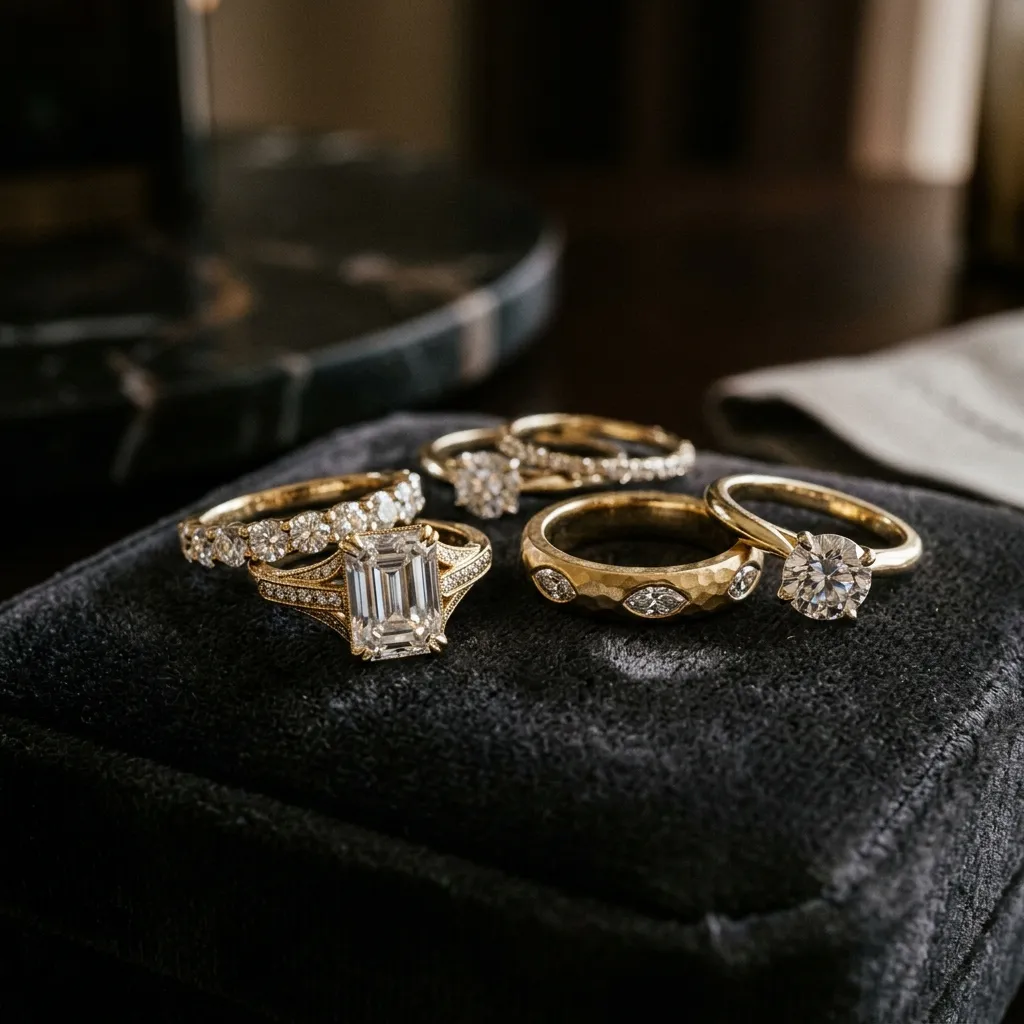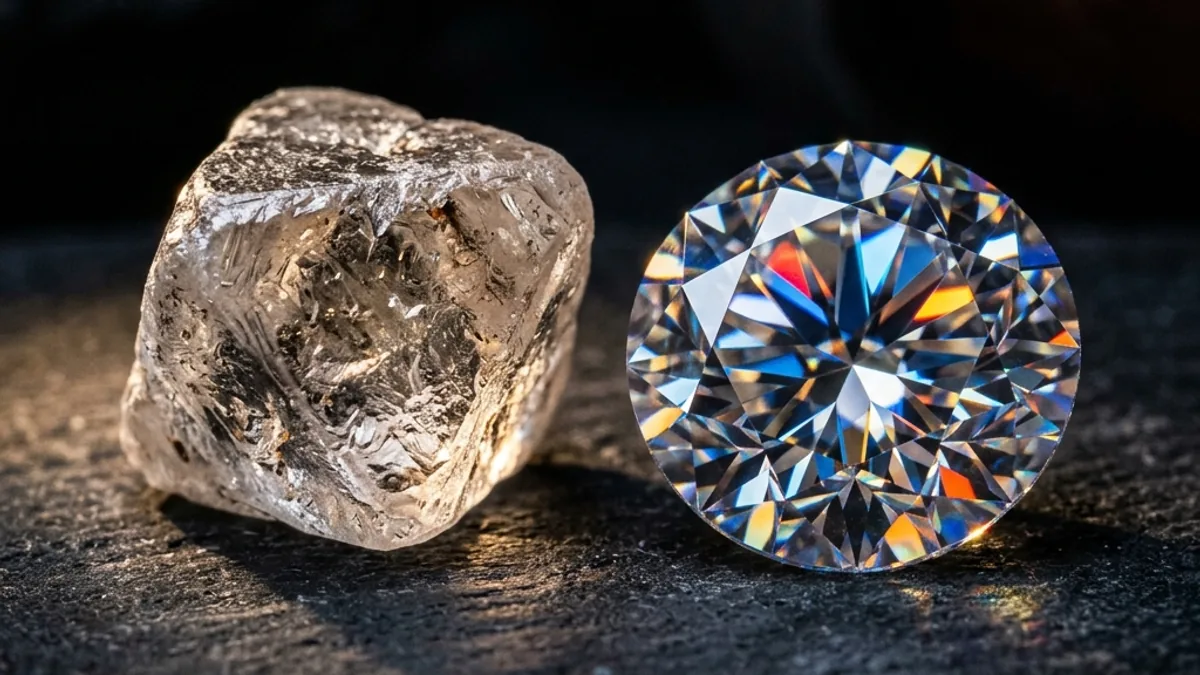
- The Lab-Grown Crash: Wholesale prices for lab-grown diamonds have dropped approximately 74% since 2020, with specific segments crashing up to 96% from historical highs.
- The Retail Gap: In 2026, lab-grown diamonds retail at 70% to 90% less than natural diamonds of identical carat, color, and clarity.
- Natural Diamond Stability: Following an 8% to 12% post-pandemic correction in 2022, mined natural diamond prices have stabilized within a predictable ±2% to 3% annual trading range.
- Market Bifurcation: Natural diamonds retain their historical status as a luxury store-of-value, whereas lab-grown diamonds trade as depreciating tech consumer goods.
- The Resale Reality: The secondary resale market for lab-grown diamonds has dropped toward near-zero liquidity, while natural diamonds consistently retain 20% to 40% of original retail value.
If you are shopping for an engagement ring or diamond jewelry in 2026, you are walking into the most violently divided market in modern gemological history. For over a century, the diamond trade operated on a singular economic foundation: controlled geological scarcity, disciplined distribution, and an unchallenged perception that diamonds were an enduring store of wealth.
Today, that century-old paradigm has fractured beyond repair. The meteoric rise and industrial scaling of lab-grown diamonds (LGDs) have triggered a structural split in the industry. At Oshnic Jewels, our research team analyzed wholesale transactions, retail price indexes, customs data, and secondary-market buyback offers across thousands of data points. The findings reveal a dramatic story: the price gap between mined and lab-grown stones is no longer just widening. It has completely severed, establishing two entirely separate asset classes.
Whether you are an investor, a luxury jeweler, or a couple seeking to maximize an engagement ring budget, navigating this split without objective market data can cost you thousands of dollars. In this comprehensive 2026 Price Index, we break down exact pricing benchmarks, manufacturing cost curves, resale truths, and future market predictions.
2026 Benchmark Price Comparison: Natural vs. Lab-Grown
To illustrate the unprecedented retail pricing divide, the following table compiles average retail transaction prices across certified stones (Round Brilliant, Excellent Cut, VS1 Clarity, G Color) in 2026:
| Carat Weight | Natural Diamond (Mined) | Lab-Grown Diamond (CVD/HPHT) | Retail Price Gap |
|---|---|---|---|
| 1.00 Carat | $5,500 – $6,500 | $500 – $800 | -88% |
| 1.50 Carat | $9,500 – $11,000 | $850 – $1,200 | -90% |
| 2.00 Carat | $16,000 – $20,000 | $1,200 – $1,800 | -92% |
| 3.00 Carat | $35,000 – $45,000 | $2,000 – $3,500 | -93% |
*Note: Benchmark figures reflect average independent retail market pricing with GIA or IGI certification. Premium designer brands apply their own bespoke setting markups.
The 74% Price Collapse: Economics of Scale and Tech Scaling
The dramatic price erosion of lab-grown diamonds is not an indicator of inferior optical beauty. A lab-grown diamond is chemically pure carbon crystallizing in an identical isometric lattice structure. Rather, the collapse in price is an inescapable consequence of industrial scaling, manufacturing competition, and technological maturation.
Between 2018 and 2026, the technology required to synthesize gem-quality diamonds advanced at exponential speed. Two primary methods dominate the production sphere:
- Chemical Vapor Deposition (CVD): Hydrocarbon gas mixtures are ionized into plasma inside vacuum chambers, depositing carbon atom-by-atom onto microscopic diamond seed plates. Yield efficiency, chamber capacity, and post-growth color consistency have multiplied fivefold.
- High Pressure High Temperature (HPHT): Hydraulic presses recreate the extreme geological conditions found 100 miles beneath the earth's mantle (temperatures of 2,500°F and pressures exceeding 850,000 psi). Modern cubic presses in industrial clusters can grow dozens of large rough crystals simultaneously.
As massive specialized facilities in Surat, India, and Henan, China, entered full operational capacity, supply curves exploded upward. Wholesale diamond prices dropped roughly 74% between 2020 and 2026. If you are evaluating whether lab-grown diamonds are worth buying, you must understand that you are buying an industrially reproducible technology product, akin to semiconductor chips or flat-screen OLED displays, where marginal unit costs decrease with every production cycle.
Natural Diamonds: The Post-2022 Structural Price Floor
In 2022, following the pandemic-fueled luxury retail surge, mined natural diamonds suffered an abrupt market correction, declining between 8% and 12% globally. Early market commentators predicted that the rapid influx of $500 lab-grown stones would permanently depress natural diamond valuations.
However, the 2026 data shows that natural diamonds have reached a rock-solid structural pricing floor. Natural diamond values have stabilized, holding a tight ±2% to 3% annual trading corridor. The stabilization occurred because natural diamonds possess an economic boundary that synthetic manufacturing cannot emulate: immutable geological scarcity and fixed operational extraction costs.
A natural diamond requires billions of years of mantle heat, volcanic kimberlite pipe transport, and hundreds of millions of dollars in subterranean mining infrastructure to extract a single carat of gem-quality rough. When prices dip, mining consortiums (such as De Beers and Rio Tinto) throttle back rough auction supply rather than selling below operational margins. This disciplined supply-side regulation protects the baseline valuation of earth-mined gems.
Resale Liquidity Analysis: The Secondary Market Reality
One of the most consequential considerations for diamond buyers is secondary-market liquidity. In 2026, the divergence in resale behavior between natural and lab-created diamonds is absolute:
Natural Diamond Resale Dynamics
When liquidating a certified natural diamond through independent jewelers, estate buyers, or auction platforms, sellers typically recoup 20% to 40% of the original retail purchase price.
While not an appreciating equity investment, natural diamonds function as an internationally recognized commodity with liquid secondary buyback demand worldwide.
Lab-Grown Diamond Resale Dynamics
In 2026, secondary-market buyback liquidity for lab-grown diamonds is effectively near zero. Estate dealers and pawnbrokers rarely purchase pre-owned synthetic stones.
Because jewelers can source brand-new, laser-inscribed lab rough at rock-bottom factory prices, used lab stones carry negligible secondary trade value.
Consumers who purchase lab-grown diamonds must approach the purchase as a consumable lifestyle expense rather than an asset with financial salvage value. You buy a lab diamond for immediate aesthetic gratification and massive upfront cash savings, not for capital preservation.
The "Size-Up" Phenomenon: Evolving Buyer Behavior
Despite transparent warnings regarding resale depreciation, consumer adoption of lab-grown diamonds has surged, commanding nearly 30% of global engagement ring sales in 2026. This growth is propelled by what gemological analysts classify as the "Size-Up Phenomenon."
In 2018, an engagement ring shopper working with a $4,000 budget was restricted to a 0.75-carat to 0.90-carat mined diamond, often compromising on SI2 clarity or J color to stay within budget. In 2026, that exact same $4,000 budget allows the buyer to acquire a magnificent 2.50-carat or 3.00-carat Lab-Grown diamond boasting an exceptional D-color, VVS1-clarity, and Triple Excellent cut specification, with enough budget remaining to afford a bespoke platinum setting.
Millennial and Gen-Z consumers prioritize visual impact, optical purity, and upfront budget optimization over hypothetical resale value. For buyers exploring alternative brilliance options, stones like Moissanite Vs Diamond The Complete Honest Comparison Formoissanite offer another compelling alternative for high refractive sparkle at minimal cost.
2027 Strategic Market Outlook
Based on reactor capacity utilization, international customs policy, and mining output trends, our gemological desk projects three dominant market shifts for 2027:
- Lab-Grown Price Equilibrium: The steep 74% price deflation curve will level off as marginal production costs meet baseline electrical and polishing expenses. Lab-grown diamonds will settle permanently as accessible fashion and design jewelry.
- Natural Diamond Upward Pressure: As aging tier-one mines deplete and strict G7 origin-tracking protocols raise import overhead, top-tier natural diamonds (2.00+ carats, colorless) are forecasted to experience a modest 2% to 4% valuation uptick over the next 24 months.
- Bifurcated Certification Dominance: Knowing how to read a diamond grading certificate is vital. GIA (Gemological Institute of America) will remain the unequivocal standard for natural gems, while IGI (International Gemological Institute) maintains leadership in lab-grown certification with mandatory laser girdle inscriptions.
Final Verdict: Choosing Between Natural and Lab-Grown
The retail price war between natural and lab-created diamonds has settled into two distinct buyer personas. Both offer identical optical brilliance, but their financial dynamics are polar opposites:
Best for: Maximum carat weight, pristine VVS clarity, and zero mining markups. Buy if you treat the ring as wearable luxury technology and are completely comfortable with near-zero secondary resale value.
Best for: Heirloom jewelry, generational gifting, and timeless geological rarity. Buy if preserving a predictable baseline store of value (20%–40% secondary liquidity) is essential to your purchase philosophy.
Frequently Asked Questions: 2026 Diamond Prices
Have lab-grown diamond prices dropped in 2026?
Yes. Wholesale prices for lab-grown diamonds have plummeted by roughly 74% since 2020, with specific retail categories down 90% from historical highs due to industrial overseas production efficiencies.
Are natural diamonds dropping in price?
No. After an 8% to 12% market correction in 2022, natural diamond prices have hit a firm structural floor and stabilized. They fluctuate within a narrow ±2-3% range through 2026.
Do lab-grown diamonds have any resale value?
In 2026, the secondary market for lab-grown diamonds is practically non-existent. Jewelers and pawn shops rarely buy them back because brand-new wholesale stones cost pennies on the dollar.
How can you tell the difference between lab-grown and natural diamonds?
They are visually, chemically, and physically identical. To identify a lab-grown diamond, appraisers use specialized photoluminescence spectrometers to detect growth patterns or inspect the girdle for laser inscriptions like 'LG' or 'Laboratory Grown'.
Are lab-grown diamonds truly eco-friendly?
While they avoid the heavy ecological land disruption and geopolitical issues of mining, diamond reactors consume immense electricity. Look for third-party certifications like SCS-007 verifying that the lab utilizes 100% renewable solar or wind energy.
Sources & Methodology
This article was researched and written in accordance with the Oshinic Jewels Editorial Policy. Claims regarding gemstone quality, metal durability, pricing, sizing, and skin health were independently verified against the following authoritative industry standards:
- Gemological Institute of America (GIA): 4Cs of Diamond Quality parameters. View Standards
- Rapaport: Market pricing baseline algorithms and natural diamond reporting. View Standards
- Federal Trade Commission (FTC): Jewelry Guides for natural vs lab-grown diamond terminology. View Standards
Don't overpay for your next diamond. Use our proprietary algorithm to calculate the exact fair market value based on current wholesale data.
Launch CalculatorDiscover which diamond shape perfectly matches your hand, style, and budget before making a purchase.
Launch Calculator