Amethyst Jewelry Meaning: Who Should Wear It Today?
Introduction
Amethyst is the purple variety of quartz and one of the world’s most recognizable colored gemstones. Its meaning has changed across cultures, but calm, clear thinking, protection, and personal discipline remain its most enduring associations.
Today, amethyst jewelry suits far more than February birthdays. Buyers choose it for its color, symbolism, affordability, and versatility across rings, earrings, necklaces, and bracelets. It can feel ceremonial in yellow gold, contemporary in white metals, or relaxed in sterling silver.
Understanding its symbolic meaning is useful, but practical considerations matter just as much. Amethyst is durable enough for many jewelry styles, though it still requires protection from hard impacts, prolonged heat, and harsh cleaning methods. This guide explains who may enjoy wearing it, what its symbolism does—and doesn’t—mean, and how to select a quality piece without relying on unsupported claims.
What Does Amethyst Jewelry Mean?
Amethyst commonly represents tranquility, mental clarity, sincerity, protection, and moderation. These meanings come from historical traditions rather than scientific evidence.
The gemstone’s association with restraint is reflected in its name. “Amethyst” derives from the Greek amethystos, commonly translated as “not intoxicated.” Ancient wearers connected the stone with sobriety and protection from drunkenness. That belief is cultural, not medical.
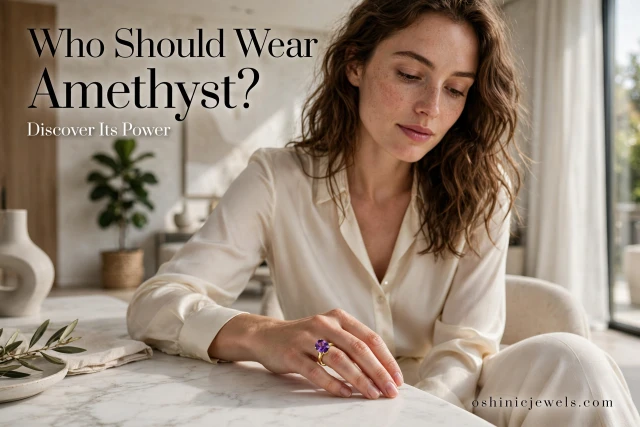
In modern jewelry, amethyst often carries a more personal meaning. It may commemorate a February birthday, an anniversary, a period of change, or a commitment to greater balance. Some people wear it during meditation or spiritual practices, while others choose it simply because purple complements their style.
A gemstone’s symbolic value doesn’t need to be universal. The most meaningful amethyst jewelry often acquires significance through the person, event, or intention attached to it.
Historical and Cultural Symbolism
Amethyst has been used in jewelry and decorative objects for centuries. Its purple color historically linked it with status, royalty, religious authority, and spiritual reflection.
Before major deposits were discovered and commercial mining expanded, fine amethyst was relatively scarce and could command high prices. Greater availability eventually made the gemstone more accessible, but its regal visual identity remained.
Christian ecclesiastical jewelry has also featured amethyst, strengthening its associations with humility, devotion, and restraint. Other traditions have interpreted purple stones as symbols of wisdom or spiritual awareness.
These meanings shouldn’t be presented as proven effects. Amethyst may serve as a personal reminder of calm or discipline, but there’s no reliable scientific evidence that wearing it treats anxiety, improves sleep, prevents intoxication, or cures illness.
Who Should Wear Amethyst Today?
Anyone who enjoys amethyst can wear it. Birthstone lists, astrology, and crystal traditions may add personal significance, but they aren’t rules governing who is permitted or suited to the gemstone.
February Birthdays
Amethyst is the modern birthstone for February. It offers an immediately recognizable connection to the wearer’s birth month and works across a broad range of budgets.
A small amethyst pendant or pair of stud earrings makes an understated birthday gift. Larger cocktail rings and statement necklaces emphasize the gemstone’s saturated purple color.
People Drawn to Calm and Clarity Symbolism
Amethyst may appeal to someone beginning a demanding job, completing a difficult chapter, or developing a more intentional routine. In this context, the stone acts as a symbolic reminder rather than a source of measurable therapeutic effects.
Purple Jewelry Lovers
Amethyst ranges from pale lilac to deep reddish purple. This range allows buyers to choose between delicate, understated jewelry and highly saturated statement pieces.
Those who wear cool colors may prefer amethyst in white gold, platinum, or sterling silver. Yellow and rose gold create warmer contrast and can make purple tones appear richer.
Buyers Seeking an Accessible Natural Gemstone
Fine amethyst is generally more affordable than ruby, sapphire, emerald, or high-quality diamond. This often allows buyers to select a larger gemstone or more elaborate design without entering the price range of rarer stones.
Price still varies with color, clarity, cutting, origin claims, craftsmanship, and the value of the setting.
Anniversary Gift Buyers
Amethyst is traditionally associated with the sixth wedding anniversary and appears in some lists for the 17th anniversary. Anniversary lists vary by source and region, so the relationship should be treated as a gifting tradition rather than a fixed standard.
Mindfulness and Spiritual Practitioners
Some people associate amethyst with meditation, intuition, or energy practices. These are spiritual beliefs and personal traditions, not established gemological or medical facts.
It’s reasonable to wear amethyst as a meaningful ritual object. It isn’t reasonable to substitute it for qualified medical or mental health care.
Can You Wear Amethyst Without Being Born in February?
Yes. Birthstones are cultural jewelry traditions, not restrictions. Wearing amethyst outside February is no different from choosing any other colored gemstone based on beauty, design, or personal meaning.
The same principle applies to zodiac associations. You don’t need to be a Pisces, Aquarius, Sagittarius, or any other sign linked with amethyst by a particular tradition. Astrological correspondences vary, and they aren’t supported by gemological science.
Personal preference is enough reason to wear the gemstone.
Amethyst Jewelry Styles Compared
| Type | Price | Wear | Pros | Cons | Best For |
|---|---|---|---|---|---|
| Stud Earrings | Low–Mod | Good | Easy & secure | Smaller stones | Daily wear |
| Pendant | Low–High | Good | Low impact | Chain snags | Everyday |
| Bracelet | Mid–High | Moderate | Stylish | Knock risk | Casual wear |
| Ring | Mid–High | Moderate | Shows color | Impact risk | Daily rings |
| Cocktail Ring | Mid–High | Moderate | Bold look | Less practical | Special events |
| Gold Jewelry | High | Good | Durable | Higher cost | Heirlooms |
| Silver Jewelry | Low–Mod | Moderate | Affordable | Tarnishes | Gifts |
Color
Color is usually the most influential quality factor. Many buyers prefer medium to dark purple amethyst with strong saturation and even color distribution. Reddish or bluish flashes may add visual interest.
Very dark stones can appear black in limited lighting. Extremely pale stones may be attractive but usually have less market demand. The best choice is a color that remains lively under the lighting conditions in which you’ll wear it.
Color zoning—visible bands or patches of different intensity—is common in amethyst. Skilled cutting can reduce its prominence, though some zoning may remain.
Clarity
Amethyst is frequently available with high apparent clarity. For faceted jewelry, look for a stone that appears eye-clean at normal viewing distance.
Visible fractures can affect appearance and durability, particularly if they reach the surface. Minor internal features aren’t automatically defects, but they should be considered alongside the price and intended use.
Cut
A well-cut amethyst should display balanced proportions, pleasing symmetry, and lively reflections. Poor cutting may create a pale or transparent area through the center, often described as a window.
Large size alone doesn’t indicate quality. A smaller, well-cut stone with attractive color can look more impressive than a larger stone with weak saturation and poor light performance.
Carat Weight
Amethyst occurs in relatively large crystals, so its price doesn’t always rise as sharply per carat as prices for rarer gemstones. This makes larger amethyst jewelry attainable, but color and cutting remain more important than size alone.
Assess dimensions as well as carat weight. Two stones of the same weight can face up differently because of their proportions.
Setting Quality
Prongs should be even, secure, and smooth enough not to catch on clothing. Bezel and halo settings can provide added protection for rings intended for regular use.
Inspect the entire piece rather than focusing only on the gemstone. Metal quality, hinge construction, clasp security, finishing, and stone alignment all influence longevity.
Amethyst in Gold, Silver, and Platinum
Yellow gold creates rich contrast against purple and suits vintage-inspired or ceremonial designs. Buyers comparing options should understand how karat affects the appearance and wear of gold jewelry. For many pieces, 14k gold offers a practical balance between gold content, durability, and price.
White gold gives amethyst a crisp, cool appearance. Rhodium-plated white gold may need replating as the surface finish wears.
Rose gold produces a softer, romantic contrast, particularly with pinkish-purple stones. The combination works well in floral and antique-inspired settings.
Sterling silver is an accessible choice that complements amethyst’s cool undertones. It can tarnish, especially in humid conditions or when exposed to chemicals, but proper storage and polishing help preserve its finish.
Platinum is durable and naturally white, though its cost may exceed what many buyers wish to spend on an amethyst setting. It makes the most sense when craftsmanship, metal longevity, or sentimental importance justifies the premium.
Amethyst Durability and Everyday Wear
Amethyst has a hardness of 7 on the Mohs scale. It resists many everyday scratches but remains less resistant than sapphire, ruby, or diamond.
Hardness measures resistance to scratching, not resistance to chipping or breaking. Rings and bracelets experience more impact than earrings and pendants, so setting design and wearing habits matter.
Amethyst can lose or change color when exposed to excessive heat, and prolonged intense light may affect some stones. Remove the jewelry before using harsh household chemicals, exercising, gardening, or performing manual work.
For routine jewelry care, wash amethyst gently with lukewarm water, mild soap, and a soft brush. Rinse thoroughly and dry with a lint-free cloth. Avoid steam cleaning. Ultrasonic cleaning may be unsuitable when a stone contains significant fractures or has received certain treatments.
Buying Guide
Who Should Buy Amethyst Jewelry?
Amethyst is a strong choice for buyers who appreciate purple gemstones, want a meaningful February gift, or prefer a natural gemstone at an approachable price. It also works well for someone seeking a distinctive alternative to neutral-colored jewelry.
Couples who want a nontraditional center stone may consider amethyst engagement rings, but they should understand the additional care required. A protective setting and realistic wearing habits are important for long-term use.
Who May Prefer Another Gemstone?
People who work frequently with their hands or want a ring they rarely remove may prefer sapphire, ruby, or diamond. These stones offer greater scratch resistance, though no gemstone is highly durable.
Buyers seeking a rare investment asset should also be cautious. Most commercial amethyst is valued as jewelry rather than as an investment, and resale prices may be substantially lower than retail prices.
Budget
Set a budget for the complete piece, including metal, craftsmanship, accent stones, retailer service, and possible future repairs. An inexpensive gemstone doesn’t guarantee inexpensive jewelry when it’s mounted in substantial gold or surrounded by diamonds.
Compare similar designs rather than relying on carat weight alone.
Quality
Prioritize appealing color, competent cutting, secure construction, and a setting appropriate for the intended frequency of wear. Examine the jewelry in natural or neutral light when possible.
For pieces with diamond accents, review the seller’s stated diamond clarity, color, and total carat weight. Tiny accent diamonds aren’t always graded individually by an independent laboratory.
Certification
Major gemological laboratories can issue identification reports confirming whether a stone is natural or laboratory-grown and describing detectable treatments. However, laboratory documentation may cost more than it adds to an inexpensive amethyst piece.
A report is more relevant for unusually valuable, historically important, or origin-dependent jewelry. A store-issued “certificate” isn’t necessarily equivalent to an independent gemological laboratory report.
Treatments and Synthetic Amethyst
Heating may be used to alter quartz color, and some amethyst can be converted into yellow or green quartz through treatment. Treatment disclosure should follow applicable trade practices.
Synthetic amethyst has essentially the same chemical composition and crystal structure as natural amethyst but is grown in a laboratory. It should be clearly disclosed and priced accordingly.
Origin claims such as “Siberian,” “Brazilian,” “African,” or “Uruguayan” shouldn’t be accepted as proof of quality without reliable documentation. Some geographic terms are also used loosely as color descriptions.
Best Overall Choice
For frequent wear, consider an eye-clean, medium-to-deep purple amethyst in a secure pendant, stud earring, or protected ring setting. Choose the color in person when possible and favor workmanship over maximum carat weight.
Long-Term Value
Amethyst jewelry’s strongest value is usually personal and wearable rather than financial. A well-made piece in durable precious metal can last for generations with proper maintenance, but buyers shouldn’t assume ordinary amethyst will appreciate in value.
Keep receipts, laboratory reports, treatment disclosures, and repair records for significant purchases.
Expert Tips
View amethyst under daylight-equivalent and warm indoor lighting before buying. Purple gemstones can look noticeably different across environments.
Check the stone from several angles. A face-up view may conceal uneven color, excessive depth, or a large transparent window.
Match the design to the wearer’s habits. Pendants and earrings generally protect amethyst better than rings and bracelets.
Choose protective prongs or a partial bezel for a frequently worn ring. Thin, high-set designs may be elegant but expose the gemstone to more impact.
Ask whether the stone is natural, synthetic, treated, or assembled. Request written disclosure for any claim that influences the price.
Common Mistakes
Buying the Darkest Stone Automatically
Darker isn’t always better. An amethyst that looks nearly black indoors may show less beauty than a moderately saturated stone with lively reflections.
Choosing Size Over Cut
Large amethysts are readily available. Poor proportions, obvious windows, or uneven color can make an oversized stone look less refined.
Treating Symbolism as Medical Evidence
Amethyst’s historical associations can be meaningful, but jewelry shouldn’t be promoted as a treatment for anxiety, insomnia, addiction, or other health conditions.
Wearing an Amethyst Ring During Manual Tasks
Repeated knocks can loosen the setting or chip the stone. Removing the ring during cleaning, sports, repairs, and heavy lifting reduces avoidable damage.
Paying a Premium for Unsupported Origin Claims
A geographic label doesn’t guarantee superior color or rarity. Evaluate the gemstone itself and request independent documentation when origin materially affects the price.
Using Harsh Cleaning Methods
Steam, sudden temperature changes, strong chemicals, and abrasive products may damage the gemstone or setting. Gentle cleaning is safer for most amethyst jewelry.
Frequently Asked Questions
Is amethyst jewelry good luck?
Amethyst has been regarded as protective or fortunate in various historical and spiritual traditions. These associations are matters of culture and personal belief rather than scientifically demonstrated effects. Someone may wear the gemstone as a reminder of positive intentions, but it can’t guarantee luck or a particular outcome.
Which hand should you wear an amethyst ring on?
There’s no gemological rule determining which hand should wear amethyst. Choose the hand and finger that feel comfortable and suit the ring’s purpose. Spiritual systems may assign different meanings to each hand, but these interpretations vary and aren’t universal.
Can amethyst be worn every day?
Amethyst can be worn regularly with reasonable care, particularly in earrings and pendants. Rings and bracelets need more caution because they’re exposed to knocks and abrasion. Remove them during manual work, exercise, cleaning, swimming, and activities involving harsh chemicals.
Does amethyst fade in sunlight?
Some amethyst may fade after prolonged exposure to strong light or heat. The degree varies by material. Normal short-term wear is generally less concerning than leaving jewelry for extended periods on a sunny windowsill, in a hot vehicle, or near a heat source.
Is dark or light amethyst more valuable?
Well-saturated medium-to-dark purple typically receives greater market interest, especially when the stone remains bright rather than appearing black. Color distribution, cutting, clarity, size, craftsmanship, and market preferences also affect value. Pale amethyst may still be desirable when its delicate color suits the design.
How can you tell whether amethyst is real?
Visual inspection alone may not reliably separate natural amethyst from synthetic amethyst or some imitations. A qualified Jewelry Expert can use magnification and gemological instruments for identification. Independent laboratory testing is the strongest option when authenticity materially affects the purchase price.
Can amethyst be used in an engagement ring?
Yes, but it requires more care than diamond, ruby, or sapphire. A low-profile bezel or protective halo can reduce exposure to impacts. Buyers should also accept that refinishing, repair, or eventual stone replacement may be necessary after years of frequent wear.
Conclusion
Amethyst jewelry carries a long-standing association with calm, clarity, protection, and self-control, yet its modern appeal extends beyond traditional symbolism. Its purple color, wide availability, and attainable pricing make it suitable for birthdays, anniversaries, personal milestones, or everyday style.
No birth month, zodiac sign, or spiritual practice is required to wear amethyst. The best wearer is simply someone who values the gemstone’s appearance or personal meaning.
When choosing a piece, prioritize attractive color, balanced cutting, secure construction, and a setting suited to the wearer’s routine. Remember that a Mohs hardness of 7 provides useful scratch resistance but doesn’t prevent chips, fractures, or heat-related color changes.
Thoughtfully selected and properly maintained, amethyst jewelry can offer lasting beauty and sentimental value without unsupported promises. Its significance ultimately comes from the quality of the piece and the meaning its owner chooses to give it.
References & Sources
- Gemological Institute of America. “Amethyst Gemstone Information .”
- Gemological Institute of America. “Amethyst Care and Cleaning Guide .”
- Encyclopaedia Britannica. “Amethyst .”
- American Gem Society. “Amethyst Birthstone .”
Sources & Methodology
This article was researched and written in accordance with the Oshinic Jewels Editorial Policy. Claims regarding gemstone quality, metal durability, pricing, sizing, and skin health were independently verified against the following authoritative industry standards:
- American Gem Society (AGS): Grading and terminology standards for colored gemstones. View Standards
- GIA Gem Encyclopedia: Geological origins, durability, and treatment information for colored stones. View Standards